 EN
EN


Understanding EOT Cranes and Gantry Cranes: Definitions and Core Structures About Electric Traveling Overhead Bridge Cranes
What Are Electric Overhead Traveling (EOT) Cranes?
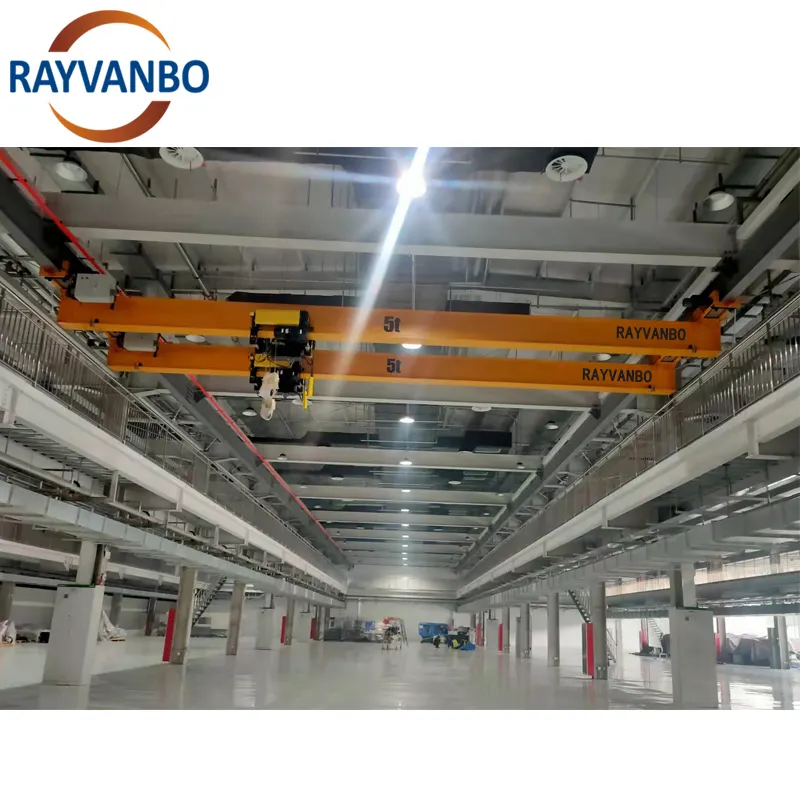
Electric Overhead Traveling or EOT cranes are basically big lifting machines used in factories and warehouses. They run on tracks installed either on the ceiling or attached to supporting structures within a building. The main part of these cranes is called a bridge, which can be made from just one girder for simpler setups or sometimes two girders when more strength is needed. This bridge moves back and forth across the track system, while a separate hoist mechanism along with a trolley does all the actual lifting work both vertically and sideways. For lighter jobs where weights stay below 20 tons and distances aren't too long, single girder versions get the job done fine. But when dealing with really heavy stuff weighing up to 500 tons or covering large spaces, manufacturers opt for double girder designs instead. What makes these cranes so useful is how they attach directly into existing building structures, freeing up valuable floor area and giving plenty of headroom for other operations going on beneath them.
What Are Gantry Cranes and How Do They Differ Structurally?
Gantry cranes stand alone as lifting systems with bridges held up by vertical legs running on rails or wheels at ground level. These differ from EOT cranes that need building structures for support. The gantry type works well outdoors or in places without strong ceiling reinforcements because they carry their own frame structure. According to industry standards published last year, this mobility makes them ideal for spots like harbors and active construction zones where putting something overhead just isn't possible. What really stands out about these machines is how adaptable they can be. Manufacturers often design them with adjustable legs and parts that fit together differently depending on what kind of ground conditions exist at any given job site.
Key Structural Components: Bridge, Runway, and Support Systems
Both crane types share core elements but differ in implementation:
- Bridge: The horizontal beam carrying the hoist. In EOT cranes, it runs along elevated tracks; in gantry cranes, it connects to vertical legs.
- Runway: EOT systems use fixed overhead rails attached to building columns, while gantry cranes rely on ground-based rails or wheels for movement.
- Support Systems: EOT cranes transfer loads to the building’s structure, whereas gantry cranes use A-frame or full-gantry legs for independent stability.
These differences influence load capacity, operational range, and installation requirements.
Key Differences Between EOT and Gantry Cranes in Application and Performance
Load Capacity, Span, and Lifting Height Comparison
EOT cranes work best for heavy lifting indoors where capacity matters most. Standard versions can handle weights as high as 100 tons, way beyond what most gantry cranes manage, which usually top out between 20 and 50 tons according to industry data from Crane Manufacturers Association in 2023. Some specialized EOT setups even tackle extremely heavy items such as massive turbine rotors found inside power generation facilities. When it comes to covering distance across large spaces though, gantry cranes take the lead. These big machines commonly stretch over 100 meters wide in places like shipbuilding yards, while EOT cranes max out at roughly 30 meters. Height is another area where EOT systems shine brighter than their counterparts. They can reach heights of about 30 meters, whereas gantry cranes generally struggle past the 20 meter mark before needing structural reinforcements.
| Parameter | EOT Crane | Gantry Crane |
|---|---|---|
| Typical Load Capacity | 5–100 tons | 10–50 tons |
| Maximum Span | 30m | 100m |
| Lifting Height | 6–30m | 4–20m |
Indoor vs. Outdoor Use: Coverage and Environmental Suitability
Enclosed spaces with minimum ceiling heights of around 8 meters are needed for EOT crane installations since they need room for those big runway beams. Most folks install these cranes in factories making cars or steel products actually - according to Industrial Safety Report numbers from last year, about three out of four installations happen there. These types work really well when everything needs to be precise and protected from bad weather conditions. Gantry cranes take over when things get outdoors though. Nearly all models built today can handle pretty strong winds too, standing up against gusts reaching speeds of 28 meters per second as noted by Global Infrastructure Review back in 2022. What makes gantry cranes so great for outside work is their solid base design which adapts nicely to rough ground surfaces. That's why we see them everywhere from busy port areas moving containers to massive warehouses dealing with outdoor storage logistics.
Mobility and Foundation Requirements: Overhead Suspension vs. Ground Rails
EOT cranes have these permanent overhead runways installed, which keeps the floor space free for other things. This is really important in small manufacturing areas where floor real estate matters so much. We're talking about saving around 40% of usable space in some cases. Gantry cranes tell another story though. They need either concrete foundations or those ground level rails, and that adds to the setup costs. The numbers from a recent study show an extra 15 to maybe even 30 percent on top of regular expenses. But what's the upside? Well worth it actually. These cranes let operators rotate loads all 360 degrees and move them around freely something fixed overhead systems just can't match when it comes to flexibility during operations.
Industrial Applications: Where EOT and Gantry Cranes Excel
EOT Cranes in Manufacturing and Assembly Facilities
EOT cranes play a vital role in those indoor settings where precision matters most. Take automotive manufacturing plants for instance these machines handle everything from engines to chassis components and even body panels as they travel along assembly lines. The steel industry depends heavily on them too, especially when moving massive coils and slabs around. Power plants aren't left out either, using EOT systems regularly during turbine maintenance work. What makes these cranes so useful is their overhead rail setup which basically takes advantage of all that vertical space above ground level. This becomes particularly important in factories with tall ceilings but not much room on the actual floor space.
Gantry Cranes at Ports, Yards, and Construction Sites
Gantry cranes work really well in big outdoor spaces. Studies show they're essential at ports when moving those standard shipping containers, in rail yards handling freight transfers, and on shipyards lifting massive parts of vessels. The double girder models can handle heavier loads, which makes them great for tough jobs. Some have rubber tires so they can move around freely between different areas of a site, others run on rails. What makes these cranes special is that they don't need buildings to support them. This means they can be set up practically anywhere, even in places like timber storage areas or wind farm construction sites where adding permanent structures just wouldn't make sense.
Case Study: Optimized Export Operations With Strategic Crane Deployment
One large exporting company saw significant improvements after switching to a mixed approach for their operations. Inside the warehouse area, they started using EOT cranes to move things around, whereas outside where containers are stacked, they went with rubber-tired gantry cranes instead. Putting these two systems together really made a difference. Loading times dropped by about thirty percent, which means more containers can be processed at the docks each day. What's interesting is how this setup bridges the gap between when products come off the assembly line and when they actually leave for shipment. Companies dealing with complicated supply chains have found that mixing different crane technologies works better than relying on just one type for all tasks.
How to Choose Between an EOT Crane and a Gantry Crane
Evaluating Facility Constraints: Indoor Space, Ceiling Height, and Building Structure
Overhead traveling (EOT) cranes need those big overhead runways bolted right into building columns, so they really work best in places that have at least around 30 feet vertically clear space and strong roof structures. These systems can cover distances as long as about 35 meters, which makes them great for those large factory spaces where columns are spaced evenly apart. On the flip side, gantry cranes don't demand much from buildings at all because they just roll along ground level tracks or wheels instead. That's why many companies opt for these when working outdoors, dealing with buildings that have limited headroom, or setting something up temporarily where putting in overhead stuff just isn't going to happen.
FAQ
- What is the main difference between EOT and Gantry cranes? EOT cranes are typically fixed overhead systems using building structures for support, whereas gantry cranes are standalone systems operating on ground rails or wheels.
- Which cranes are better for outdoor operations? Gantry cranes are ideal for outdoor operations due to their adaptability and lack of dependency on building structures.
- Can EOT cranes be installed in small spaces? Yes, EOT cranes efficiently utilize vertical space and can save up to 40% of floor space in small manufacturing areas.
- How does the load capacity of EOT cranes compare to gantry cranes? EOT cranes can handle heavier loads, with capacities ranging from 5 to 100 tons, while gantry cranes typically manage loads between 10 and 50 tons.
- Which industries commonly use EOT cranes? EOT cranes are widely used in automotive and steel industries, power plants, and other manufacturing settings requiring precise operations.
Table of Contents
- Understanding EOT Cranes and Gantry Cranes: Definitions and Core Structures About Electric Traveling Overhead Bridge Cranes
- Key Differences Between EOT and Gantry Cranes in Application and Performance
- Load Capacity, Span, and Lifting Height Comparison
- Indoor vs. Outdoor Use: Coverage and Environmental Suitability
- Mobility and Foundation Requirements: Overhead Suspension vs. Ground Rails
- Industrial Applications: Where EOT and Gantry Cranes Excel
- How to Choose Between an EOT Crane and a Gantry Crane