 EN
EN



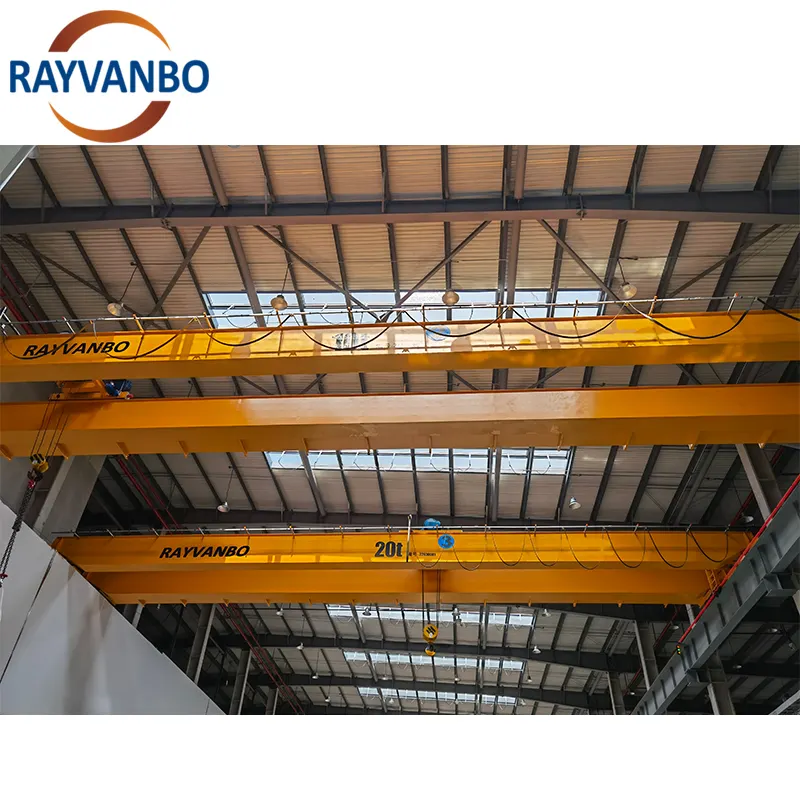
Understanding Electric Traveling Overhead Bridge Cranes
What Is an Electric Overhead Traveling (EOT) Crane?
Electric Overhead Traveling (EOT) cranes are basically big lifting systems that ride along overhead tracks, making it possible to move materials around in all directions within industrial spaces. These differ from things like mobile cranes or forklifts because they stick to fixed routes running across factory ceilings or structural beams throughout buildings. Most EOT systems have four main parts working together: the bridge which acts as the main horizontal support beam, the trolley that moves back and forth along the bridge, the actual hoist that does the lifting work, and finally those long steel tracks called runways that everything rides on. According to U.S. OSHA standards, these cranes qualify as movable bridges equipped with hoisting gear since they can follow set pathways while simultaneously moving loads both up/down and side to side across large manufacturing areas.
Key Differences Between EOT Cranes and Other Lifting Equipment
EOT cranes excel in precision and overhead space optimization. For example:
| Feature | EOT Crane | Mobile Crane | Forklift |
|---|---|---|---|
| Movement Axis | 3D (vertical + horizontal) | 3D (limited stability) | 2D (ground-only) |
| Workspace | Overhead | Ground | Ground |
| Load Capacity | Up to 500 tons | Up to 1,200 tons | Up to 50 tons |
Their fixed installation reduces floor obstructions, critical in assembly lines or steel plants, while offering superior load stability compared to forklifts.
The Evolution and Modern Features of Electric Traveling Overhead Bridge Cranes
Back when they were all manually operated in the 1800s, overhead traveling (EOT) cranes have come a long way. Today's versions are packed with automated functions and connected through IoT sensors that monitor everything in real time. Take variable frequency drives (VFDs) for example – around two thirds of manufacturers rely on these devices to control how fast or slow their cranes move, according to industry reports from Crane Manufacturers Association last year. Some of the newer models even include smart collision detection systems that prevent dangerous clashes between equipment, plus remote diagnostic tools that let technicians troubleshoot problems without being onsite. Facilities benefit greatly from modular design options too, allowing quick setup changes across different manufacturing environments. Safety improvements have been remarkable as well, with lifting related injuries dropping nearly a third since early 2020 thanks to these technological advances meeting updated safety requirements throughout the industry.
How Electric Traveling Overhead Bridge Cranes Work: Components and Operation
The Working Principle of EOT Cranes
Electric traveling overhead bridge cranes work by moving in three different directions at once. The main bridge slides side to side on those tall runway tracks, while the trolley runs back and forth along the bridge itself. Then there's the hoist mechanism that goes straight up and down. All these movements together let operators place heavy items exactly where they need them inside a specific work area shaped like a rectangle. Because of this setup, these cranes are particularly good for jobs that require repeating the same lifting pattern over and over again, or when accuracy matters a lot in manufacturing settings.
Core Components: Bridge, Runway, Trolley, and Hoist
The crane's structural foundation consists of four essential elements:
- Bridge: Dual girders supported by end trucks that travel on runway rails
- Runway: Elevated track system guiding bridge movement
- Trolley: Motorized carriage transporting loads along the bridge
- Hoist: Electromechanical lifting mechanism with wire rope or chain
These components work together to achieve load capacities up to 500 tons (ASME B30.2-2023), with bridge speeds reaching 200 ft/min in modern systems.
Power Transmission and Electrical Control Systems
Most modern overhead traveling cranes run on three phase AC power, usually between 380 and 480 volts, which gets fed through those flexible cable carriers we see hanging from the ceiling. These machines come equipped with several important components. Variable frequency drives help control how fast they accelerate, while PLCs handle all the automated functions. And there are those emergency stop circuits too, responding almost instantly when needed. One big advantage comes from regenerative braking technology, which cuts down on energy usage significantly compared to older resistance braking systems. Some estimates put this savings at around 40%, though it can vary depending on usage patterns. For safety, most units have interlock systems that kick in before anything gets overloaded or crashes into something else. This helps keep everything running within OSHA guidelines, but manufacturers often go beyond minimum requirements just to be extra cautious.
Types and Configurations of Electric Overhead Traveling Cranes
Electric Traveling Overhead Bridge Cranes offer diverse configurations to meet industrial demands. Manufacturers typically design these systems around load capacities, workspace dimensions, and operational requirements.
Single Girder vs Double Girder Cranes: A Comparative Analysis
Single girder cranes rely on just one horizontal beam to lift weights as heavy as 25 tons according to the latest Industrial Lifting Report from 2024. These are great value options for shops where ceiling height is tight. When we look at double girder systems with their two parallel beams, they can manage much heavier stuff over 100 tons actually and offer better stability when precise lifting matters most. According to that same 2024 report, these double beam models tend to last longer in busy industrial settings too. The numbers suggest around 15 to 20 percent longer service life because there's less bending and stress points throughout regular operation cycles.
Underhung vs Top-Running Crane Systems
Underhung cranes attach right to the roof supports and run along the bottom part of the runway beam. These work great in areas where there are things blocking the floor space or when buildings have shorter ceilings. For places that need higher lifting capabilities, top running systems are the way to go. They run on rails installed on top of raised beams which gives them extra headroom and allows heavier loads. Foundries dealing with molten metal typically prefer these because they can handle much bigger weights and reach higher points in the facility.
Specialized Variants for Unique Industrial Applications
Custom configurations include explosion-proof cranes for chemical plants, magnet-equipped models for steel yards, and ultra-low-clearance designs for shipbuilding drydocks. Aerospace facilities often deploy tandem systems with synchronized hoists to maneuver aircraft components with sub-millimeter precision, ensuring alignment during assembly processes.
Selecting the Right EOT Crane by Load Capacity and Span
Match the crane's rated capacity to peak operational loads, including a 25% safety margin for dynamic forces (OSHA 2023). Span lengths between 30–120 feet influence structural rigidity—double girder cranes are recommended for spans over 80 feet to minimize deflection and maintain long-term performance.
Applications Across Industries and Operational Best Practices
Electric Traveling Overhead Bridge Cranes are versatile systems that streamline heavy-load operations across industries. Their modular design and precision control make them indispensable for businesses prioritizing efficiency and safety.
EOT Cranes in Manufacturing and Assembly Lines
In automotive and aerospace manufacturing, EOT cranes handle engines, fuselages, and other bulky components with millimeter accuracy. They support just-in-time workflows by delivering parts directly to assembly stations, reducing production bottlenecks by 20–35% in high-volume facilities.
Material Handling in Steel Plants and Heavy Engineering
Steel mills rely on double-girder EOT cranes equipped with heat-resistant hoists to transport molten metal ladles (up to 500 tons) and forged components. Magnetic attachments allow efficient handling of steel coils and sheets, minimizing manual labor in extreme-temperature environments.
Warehousing, Distribution, and Automotive Sector Use Cases
- Warehousing: High-speed EOT systems with remote controls optimize pallet stacking in warehouses with ceiling heights exceeding 30 feet
- Automotive Logistics: RFID-enabled cranes automatically sort vehicle chassis in distribution centers, improving throughput and inventory accuracy
Custom Applications in Power Plants and Specialized Facilities
Nuclear facilities use explosion-proof EOT cranes with redundant braking systems to safely handle reactor components during maintenance. Wastewater treatment plants deploy corrosion-resistant models with IP65-rated electrical enclosures for reliable operation when lifting submerged equipment.
Safety, Maintenance, and Longevity of Electric Traveling Overhead Cranes
Proper safety protocols, maintenance routines, and load management practices directly impact the operational lifespan of electric traveling overhead bridge cranes. Facilities that prioritize these elements reduce unplanned downtime by 43% while extending equipment service life by 7–12 years (Material Handling Institute 2023).
Common Safety Hazards and OSHA/ANSI Compliance Guidelines
The most common risks include overloaded hoists (28% of incidents), misaligned runway beams, and damaged electrical cabling. OSHA 1910.179 and ANSI B30.2 require monthly load testing, automatic overload shutoff systems, and the use of corrosion-resistant components in humid or corrosive environments.
Daily and Periodic Inspection Checklists for EOT Cranes
| Inspection Type | Frequency | Key Checks |
|---|---|---|
| Daily | Before shift | Hoist brake function, hook deformation, limit switch responsiveness |
| Periodic | Monthly/Annual | Runway rail alignment, gearbox lubrication, wire rope wear patterns |
Facilities operating in high-temperature environments require inspections 34% more frequently to counter accelerated component degradation.
Operator Training and Emergency Response Protocols
Certified training programs combining 40+ hours of classroom instruction and hands-on drills reduce human-error accidents by 67%. Emergency procedures must cover load recovery during power failures, evacuation routes for uncontrolled loads, and PPE requirements in high-risk conditions such as lightning-prone areas.
Routine Maintenance and Load Capacity Management
Scheduled lubrication and quarterly replacement of load-bearing components prevent 82% of mechanical failures. For cyclic loading applications, avoid exceeding 85% of the crane's rated capacity—a practice shown to reduce metal fatigue cracks in longitudinal welds by 91%.
Frequently Asked Questions
What are EOT cranes used for?
Electric Overhead Traveling cranes are used primarily in industrial spaces for moving heavy materials in all directions. They maximize overhead space and provide precision lifting, making them ideal for manufacturing, assembly lines, and other heavy lifting tasks.
What is the difference between single girder and double girder cranes?
Single girder cranes have one horizontal beam and are suitable for lighter loads up to approximately 25 tons, while double girder cranes have two parallel beams that can support much heavier loads over 100 tons. Double girder cranes offer better stability and longer service life in demanding settings.
How do electric overhead traveling bridge cranes operate?
EOT cranes use three-directional movement to place heavy items within a work area. The main components include the bridge, runway, trolley, and hoist, which work together to achieve high precision and load capacity.
What safety protocols should be followed when operating EOT cranes?
Operators should adhere to OSHA and ANSI guidelines, including regular load testing, maintenance routines, daily inspections, and certified training to minimize risks and extend the equipment's service life.
Table of Contents
- Understanding Electric Traveling Overhead Bridge Cranes
- How Electric Traveling Overhead Bridge Cranes Work: Components and Operation
- Types and Configurations of Electric Overhead Traveling Cranes
- Applications Across Industries and Operational Best Practices
- Safety, Maintenance, and Longevity of Electric Traveling Overhead Cranes
- Frequently Asked Questions