As an indispensable lifting equipment in industrial production, the service life of a hoist directly affects production efficiency, operational safety, and operating costs. The factors influencing its lifespan are not singular but rather a combination of usage methods, environmental conditions, maintenance, and the quality of the product itself. Among these, the following factors are the most critical:
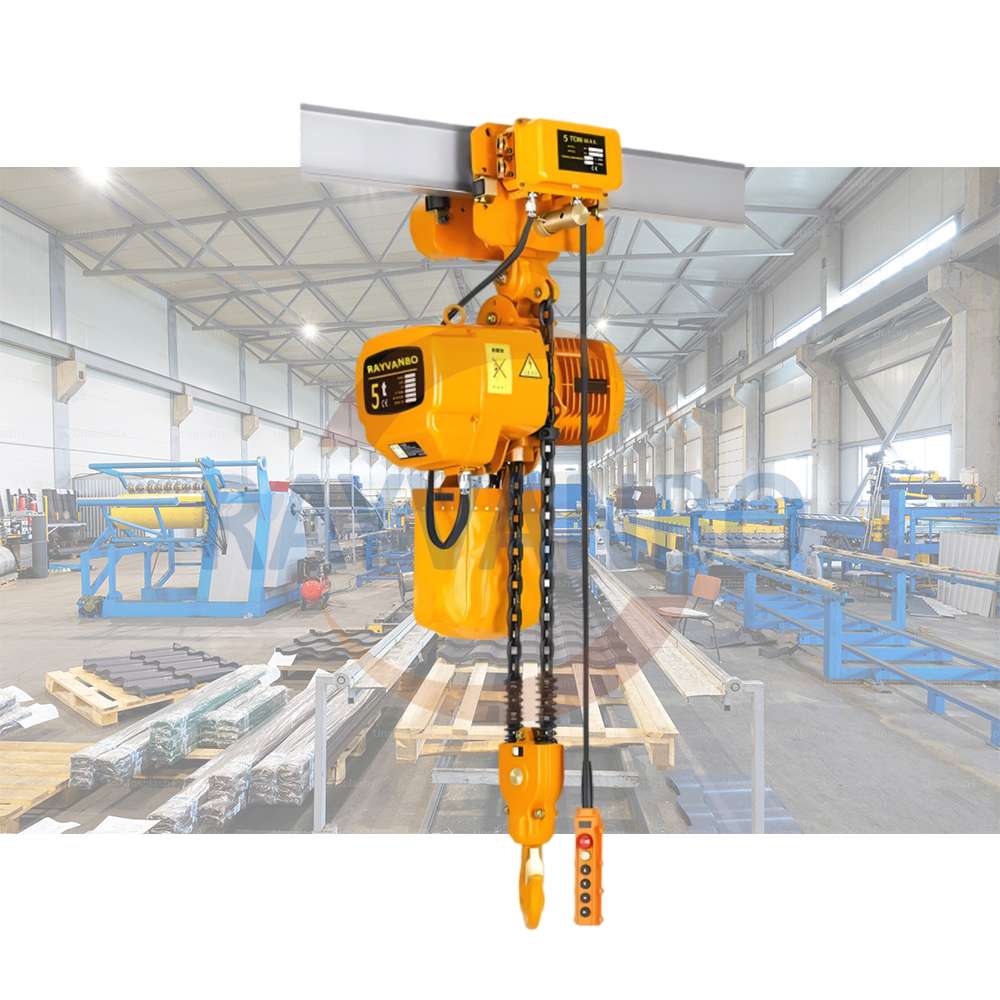
Proper Load Usage: hoists are designed with rated load limits. Prolonged overloading or frequent operation near these limits significantly accelerates wear and fatigue in core components such as gears, wire ropes, and brakes. Furthermore, improper operation, such as oblique lifting, sudden lifting, or braking, generates instantaneous impact forces that cause irreversible damage to the transmission system and structural components, significantly shortening the equipment's lifespan. Proper use requires strict adherence to rated load requirements, maintaining vertical lifting, and smooth operation of lifting, lowering, and braking.
Environmental Conditions: Environmental conditions significantly impact equipment lifespan. In harsh environments with high temperatures, high humidity, dust, or corrosive gases, the metal parts of the hoist are prone to corrosion, and electrical components are susceptible to short-circuit failure. For example, high temperatures reduce lubricant performance and exacerbate component friction; corrosive media at seaside or chemical plant sites can erode wire ropes and housings. Conversely, use in dry, normal-temperature, and clean environments, along with necessary protective measures, can effectively slow down component aging.
Regular maintenance is crucial for extending lifespan. Neglecting lubrication, cleaning, and inspection will increase frictional resistance between components, accelerate wear, and prevent the timely detection of potential faults. Proper maintenance includes regularly changing to suitable lubricants, cleaning dust and debris, checking wire rope wear, and calibrating brake sensitivity. Timely maintenance can eliminate minor faults in their early stages, preventing premature component failure.
The quality of the product itself is paramount. High-quality materials, precise manufacturing processes, and a rational structural design enable hoists to have stronger load-bearing capacity and wear resistance. Equipment made with inferior materials and crude processes has insufficient strength in core components, making it prone to deformation and breakage. Even with proper use and maintenance, its lifespan will be far shorter than that of qualified products.
In summary, to extend the lifespan of hoists, it is necessary to consider three key aspects of use: standardized operation, environmental protection, and regular maintenance. At the same time, it is essential to select reliable products and implement scientific management throughout the entire lifecycle.
 Hot News
2026-09-21
2026-09-02
2026-08-19
2026-07-15
2026-07-09
2026-07-01
 EN
EN