As global manufacturing moves toward automation, digitalization, and higher safety standards, traditional lifting equipment is no longer sufficient for many industrial environments. Modern factories demand precise control, real-time monitoring, higher efficiency, and intelligent safety protection. In this context, the Intelligent Hoist has emerged as a key component of smart material handling systems.
An Intelligent Hoist combines conventional lifting mechanics with advanced electronic control, sensor technology, and data processing capabilities. Unlike standard electric hoists that rely mainly on manual operation and basic protection, intelligent hoists provide active safety management, optimized motion control, and operational transparency, helping manufacturers reduce risks, improve productivity, and support long-term smart factory development.
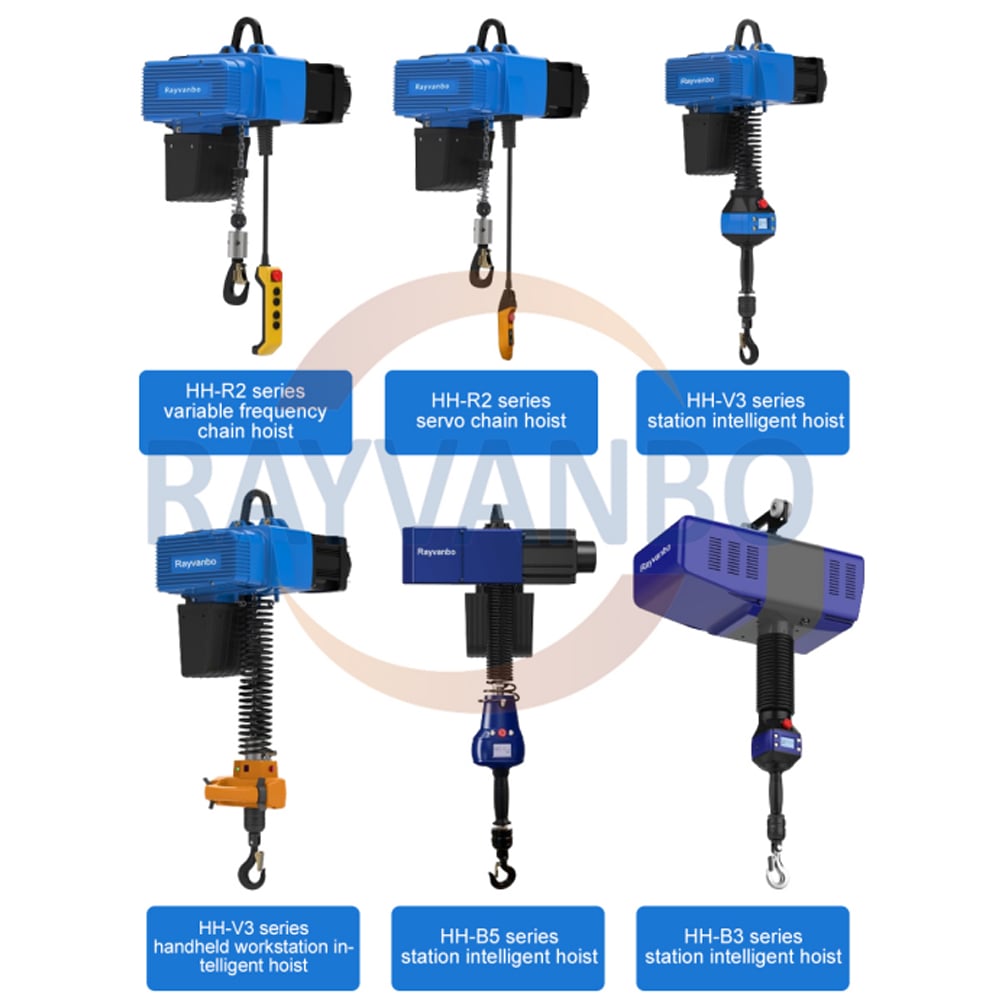
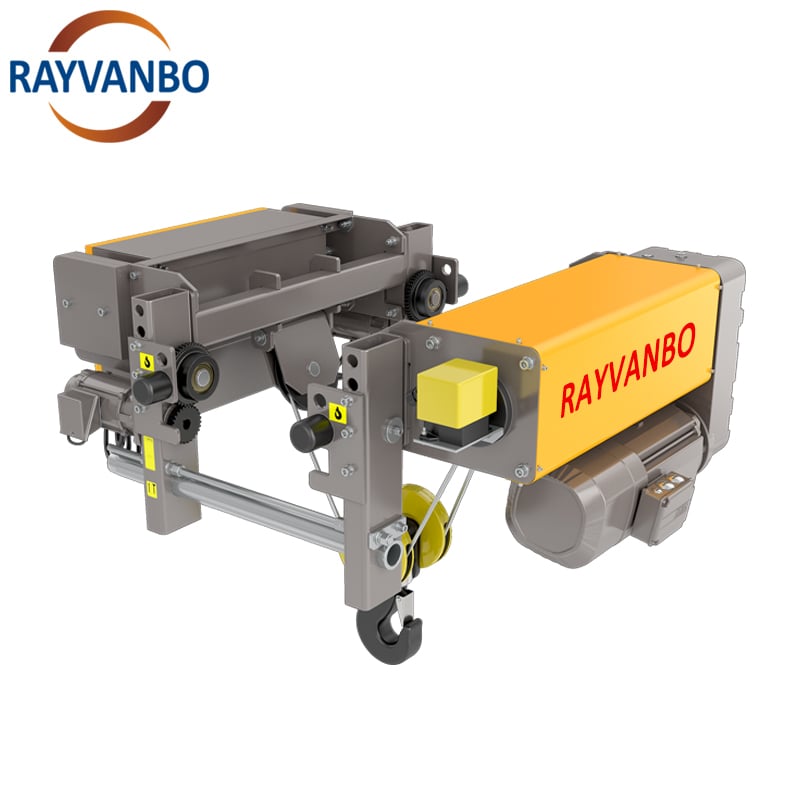
An Intelligent Hoist is a next-generation lifting device designed to perform lifting, lowering, and positioning tasks with a high degree of automation and precision. It is typically based on an electric chain hoist structure, enhanced with intelligent control units, variable frequency drives (VFD), load monitoring sensors, and digital communication interfaces.
The defining characteristic of an intelligent hoist is its ability to collect, analyze, and respond to operational data in real time. Key parameters such as load weight, lifting speed, position, operating cycles, motor temperature, and braking status are continuously monitored. This data-driven approach allows the hoist to operate more safely and efficiently while providing valuable information for maintenance planning and production management.
The working principle of an intelligent hoist is based on closed-loop control and continuous feedback. During lifting operations, integrated load sensors measure the actual suspended load, while encoders track lifting height, travel distance, and speed. Temperature sensors monitor motor and brake conditions to prevent overheating.
All sensor data is transmitted to the intelligent control unit, which processes the information in real time. Through variable frequency control, the system precisely regulates motor speed, ensuring smooth acceleration and deceleration. This eliminates sudden starts and stops that can cause load swing, mechanical shock, and component wear.
If abnormal conditions such as overload, excessive temperature, abnormal vibration, or incorrect operation are detected, the intelligent hoist automatically activates alarms or protective shutdown functions. This proactive protection mechanism significantly reduces the risk of accidents and equipment damage, making intelligent hoists ideal for demanding industrial environments.
Intelligent hoists integrate multiple advanced technologies to achieve smart lifting performance. Variable frequency drives enable stepless speed regulation and precise positioning. Load monitoring systems provide continuous overload protection and improve lifting accuracy.
Advanced braking systems ensure smooth stopping and stable load holding, while embedded software enables self-diagnosis and fault recording. Communication interfaces allow intelligent hoists to connect with PLC systems, crane control units, and factory automation platforms, forming a complete intelligent lifting solution.
Compared with standard electric hoists such as conventional HHBB electric chain hoists, intelligent hoists represent a significant technological upgrade. Traditional electric hoists typically operate with fixed speeds, limited protection functions, and no data feedback. Safety relies heavily on operator experience and routine inspections.
In contrast, intelligent hoists provide real-time monitoring, adaptive control, and automated safety logic. They reduce operator dependency, improve positioning accuracy, and minimize lifting errors. For production lines requiring repeatable precision, high operating frequency, and consistent quality, intelligent hoists offer clear advantages over standard lifting equipment.
Item |
Intelligent Hoist |
Standard Electric Hoist |
Control System |
Intelligent control with VFD |
Basic electrical control |
Speed Control |
Stepless variable speed |
Fixed or limited speeds |
Operation Smoothness |
Smooth start and stop, low impact |
Noticeable start/stop impact |
Load Protection |
Real-time load monitoring, active overload protection |
Basic overload protection |
Safety Level |
Multiple automatic safety protections |
Relies mainly on operator |
Positioning Accuracy |
High positioning accuracy |
General accuracy |
Intelligence |
Data monitoring and fault diagnosis |
No data feedback |
System Integration |
PLC and automation system compatible |
Standalone operation |
Maintenance Method |
Predictive maintenance |
Reactive maintenance |
Typical Applications |
Automated lines, smart factories |
General lifting tasks |
Initial Cost |
Higher |
Lower |
One of the most significant advantages of intelligent hoists is enhanced operational safety. Continuous monitoring and automatic protection greatly reduce the risk of overload, misoperation, and unexpected equipment failure, protecting both personnel and assets.
Intelligent hoists also deliver higher efficiency and productivity. Smooth speed control and precise positioning shorten lifting cycles, reduce adjustment time, and improve workflow efficiency. This is especially valuable in automated and semi-automated production environments.
Another key benefit is extended service life and reduced maintenance cost. Controlled motion reduces mechanical stress, while data-based maintenance allows early detection of potential issues. Over time, this lowers downtime and improves return on investment.
Finally, intelligent hoists support digital management and smart factory integration, providing data visibility that helps enterprises optimize production planning and equipment utilization.
Intelligent hoists are widely used in automotive manufacturing, precision assembly lines, mold handling, machinery installation, and automated logistics systems. They are particularly suitable for applications requiring high positioning accuracy, frequent lifting cycles, and strict safety control.
In modern smart factories, intelligent hoists are often integrated into overhead crane systems, workstation cranes, and automated material handling solutions. Their ability to communicate with control systems makes them a critical element of intelligent production infrastructure.
Selecting the right intelligent hoist requires careful evaluation of load capacity, lifting height, duty class, and operating frequency. Control requirements such as speed range, positioning accuracy, and system compatibility should be clearly defined. Environmental conditions, including temperature, humidity, and workspace constraints, must also be considered.
Although intelligent hoists offer advanced protection and reliability, proper maintenance remains essential. Regular inspection of sensors, control units, and electrical connections ensures accurate data transmission and stable performance.
Operational data should be analyzed periodically to identify abnormal trends and schedule preventive maintenance. Routine inspection of mechanical components such as chains, hooks, and brakes further ensures safe and efficient long-term operation.
What makes an intelligent hoist different from a standard electric hoist?
An intelligent hoist integrates real-time monitoring, precise control, and advanced safety protection, while standard electric hoists provide basic lifting functions only.
Are intelligent hoists suitable for small factories?
Yes. Intelligent hoists can improve safety and efficiency even in small or medium-sized facilities and support future automation upgrades.
Can intelligent hoists be integrated into automated systems?
Yes. They are designed for seamless integration with PLC and industrial automation platforms.
Is the initial cost higher?
Yes, but reduced downtime, improved efficiency, and longer service life offer strong long-term value.
Intelligent hoists represent the future of industrial lifting technology. By combining precise control, real-time monitoring, and intelligent safety protection, they provide a reliable, efficient, and scalable lifting solution for modern manufacturing environments.
If you are planning to upgrade your lifting system or build a smart production facility, Intelligent Hoists offer a powerful solution that balances safety, efficiency, and long-term value.
 Hot News
2026-09-21
2026-09-02
2026-08-19
2026-07-15
2026-07-09
2026-07-01
 EN
EN