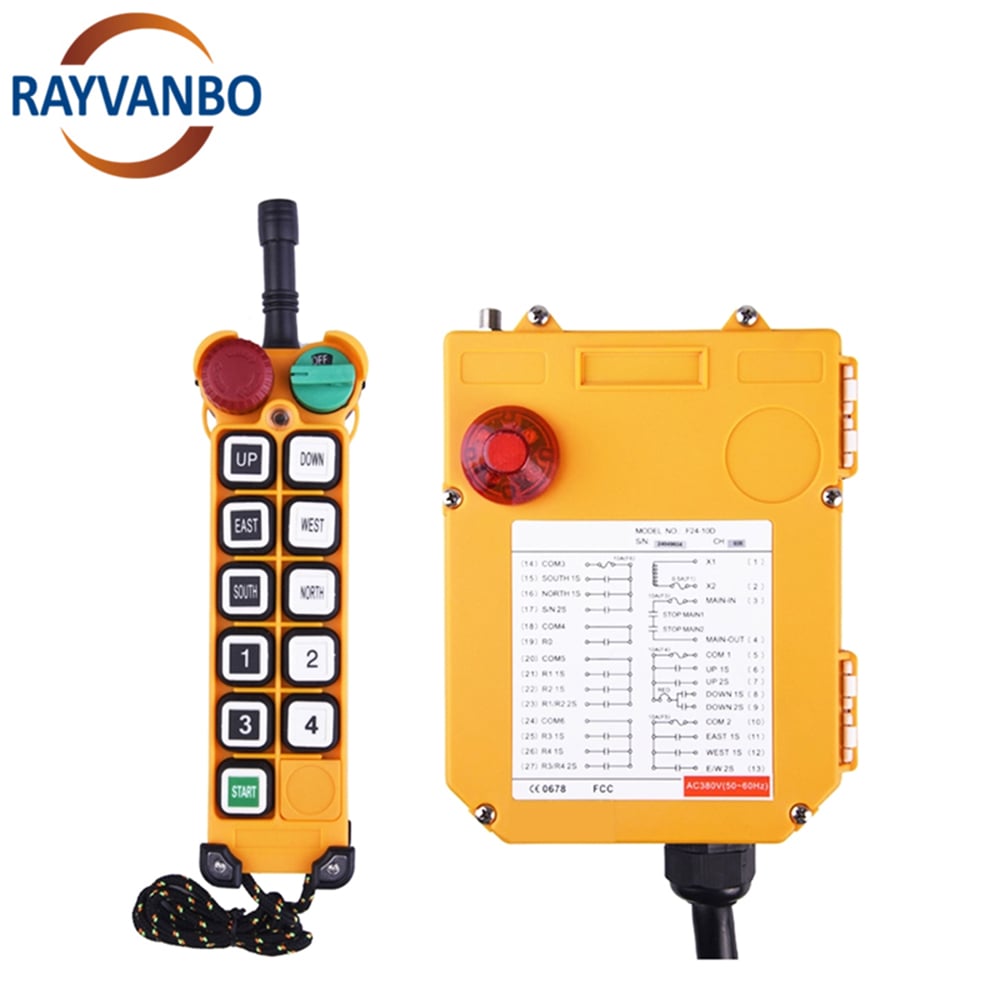
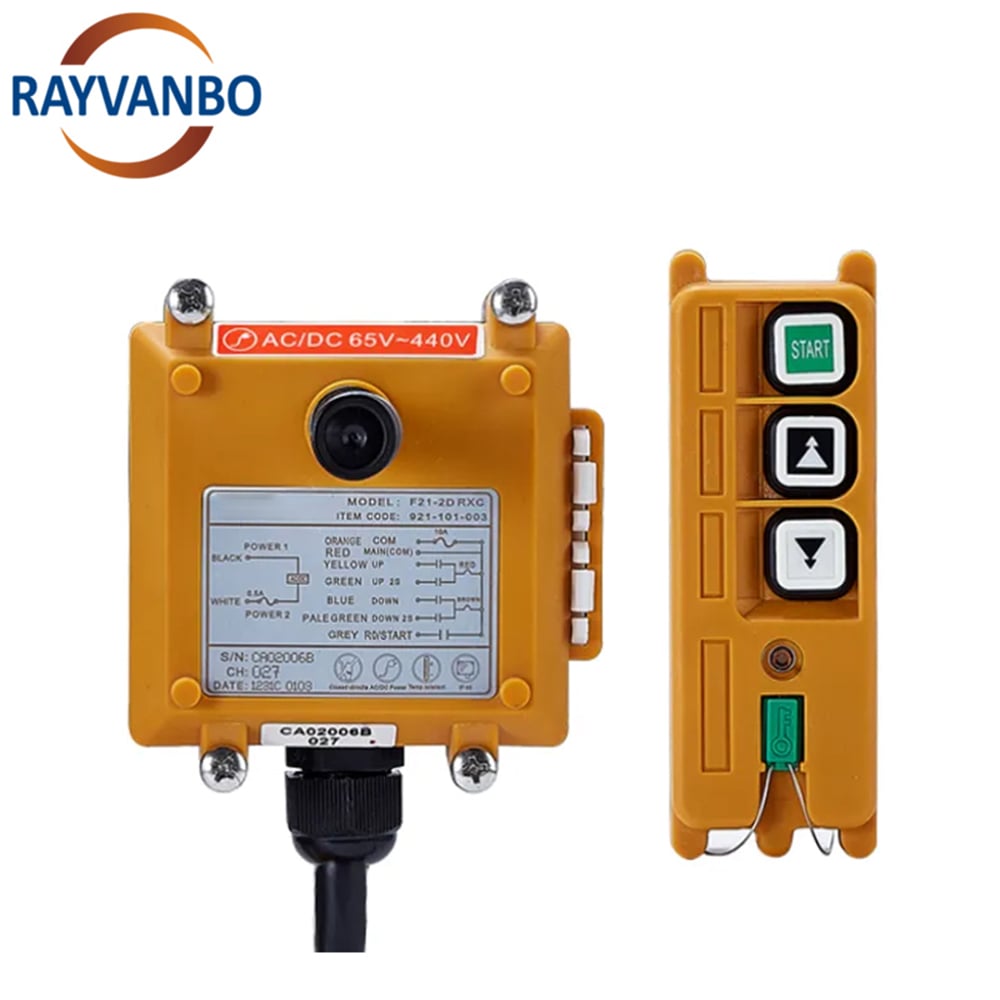
In industrial lifting equipment selection, heavy-duty lifting applications are always a key concern for manufacturing plants, steel structure workshops, heavy machinery factories, and energy industries. Compared with chain hoists, wire rope electric hoists offer superior stability, higher safety factors, and longer service life in large-capacity applications. As a result, they are widely used for 10-ton, 20-ton, 32-ton, and even 50-ton lifting systems. So why are wire rope electric hoists more suitable for heavy-duty lifting? What structural and performance advantages make them the preferred solution for large-capacity overhead crane systems? This article provides a comprehensive analysis from the perspectives of structural design, load distribution, operational stability, duty classification, and long-term cost efficiency.
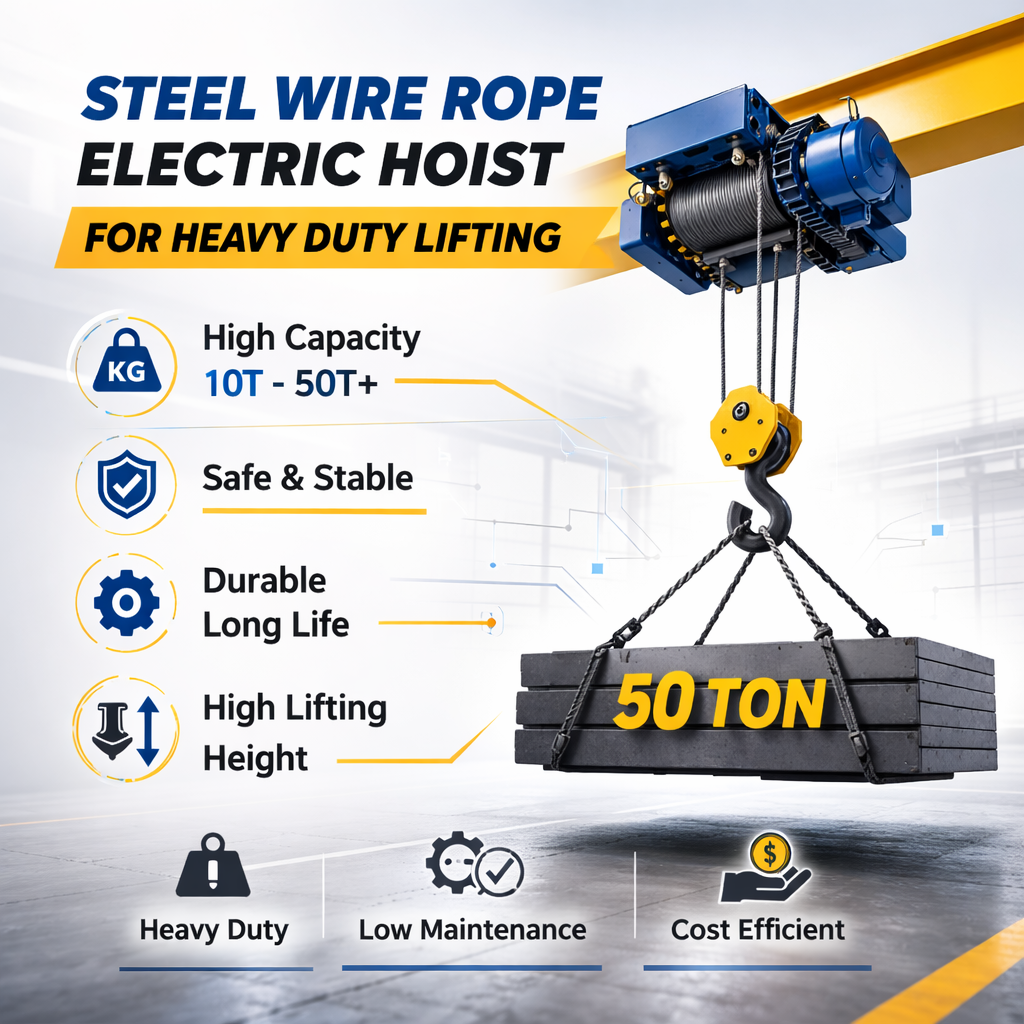
The core load-bearing component of a wire rope electric hoist is the high-strength steel wire rope. It is composed of multiple strands of steel wires twisted together, offering excellent tensile strength and flexibility. In heavy-duty lifting conditions, the wire rope distributes load stress more evenly, reducing the risk of concentrated force on a single point.
Compared with chain structures, wire rope systems generally have lower self-weight under the same lifting capacity while achieving greater lifting heights. This is one of the main reasons why wire rope electric hoists are widely used in overhead cranes with large spans and high workshop ceilings.
For heavy material handling such as steel coils, large molds, mechanical components, and structural beams, the tensile strength and fatigue resistance of wire rope systems are significantly superior, ensuring higher reliability and safety in large-tonnage lifting operations.
Operational stability is critical in heavy-duty lifting applications. Wire rope electric hoists typically adopt a drum-type structure, where the wire rope is neatly wound around a grooved drum. This design ensures smooth lifting motion and minimizes the risk of entanglement or jamming.
In high-frequency industrial production lines, heavy-duty electric hoists often operate continuously for long periods. The transmission system of a wire rope electric hoist features a compact gearbox design and electromagnetic braking system, allowing smooth starting and precise stopping while reducing impact loads.
When integrated into overhead cranes or gantry cranes, wire rope electric hoists provide more stable traveling performance, reduce load swing, and improve overall heavy material handling efficiency.
Heavy-duty lifting usually involves intensive usage cycles, which require a higher working duty classification. Wire rope electric hoists are commonly designed to meet M4, M5, or even M6 duty classes, making them suitable for medium-heavy to heavy industrial operations.
A higher duty class means longer service life and better durability. Under continuous cyclic loading, wire rope systems demonstrate stronger fatigue resistance and reduced risk of structural failure, improving the reliability of the entire crane system.
For steel fabrication plants, heavy machinery manufacturers, and production lines with continuous operation, selecting a high-duty wire rope electric hoist significantly reduces downtime and enhances operational productivity.
Heavy-duty lifting applications are often associated with higher lifting heights. Wire rope electric hoists can be configured with extended rope lengths, achieving lifting heights of 20 meters, 30 meters, or even more depending on project requirements.
Because the wire rope maintains reasonable self-weight even at higher capacities, it does not impose excessive additional load on the system. This makes wire rope electric hoists particularly suitable for high-bay workshops, shipbuilding facilities, and energy equipment installation projects.
In contrast, chain hoists may experience performance limitations in extremely high lifting applications due to increased chain weight and reduced operational efficiency.
Heavy-duty lifting operations require enhanced safety standards. Wire rope electric hoists are typically equipped with:
During heavy lifting operations, these safety mechanisms help prevent overload accidents, operational errors, or risks caused by sudden power failure.
Especially in heavy-duty overhead crane systems, the safety redundancy and industrial-grade design of wire rope electric hoists meet the strict requirements of long-term heavy-load applications.
Although the initial purchase cost of a wire rope electric hoist may be slightly higher than some light-duty alternatives, its long-term operating cost is more economical in heavy-duty environments.
Wire rope replacement cycles are longer, gearbox durability is stable, and key components experience lower wear rates. For industrial crane systems operating under large-capacity loads, stability directly translates into reduced maintenance downtime and improved production output.
From a return-on-investment perspective, wire rope electric hoists provide better cost performance in lifting applications above 10 tons.
Wire rope electric hoists are extensively applied in:
In these heavy-duty lifting environments, safety, stability, and durability are far more critical than in light-duty applications, making wire rope electric hoists the standard solution.
Considering structural strength, operational stability, duty classification, lifting height capability, and advanced safety systems, wire rope electric hoists clearly offer superior performance in heavy-duty lifting applications.
For companies requiring lifting capacities above 10 tons, choosing a high-quality wire rope electric hoist not only enhances productivity but also ensures long-term safe operation.
In modern industrial crane systems, wire rope electric hoists have become the core lifting mechanism of overhead cranes and gantry cranes. Proper selection, correct duty classification, and integration with an efficient control system will help enterprises build safer, more efficient, and more reliable heavy-load lifting solutions.
 Hot News
2026-09-21
2026-09-02
2026-08-19
2026-07-15
2026-07-09
2026-07-01
 EN
EN