Installing an overhead crane is a critical process for ensuring safe and efficient material handling in factories, warehouses, workshops, steel plants, and industrial production facilities. Proper installation directly affects crane performance, operational safety, equipment lifespan, and future maintenance costs.
Whether you are installing a single girder overhead crane or a double girder overhead crane, following the correct installation procedure is essential. In this guide, we will explain the complete overhead crane installation process step by step, helping industrial buyers and project managers better understand the key requirements before crane commissioning.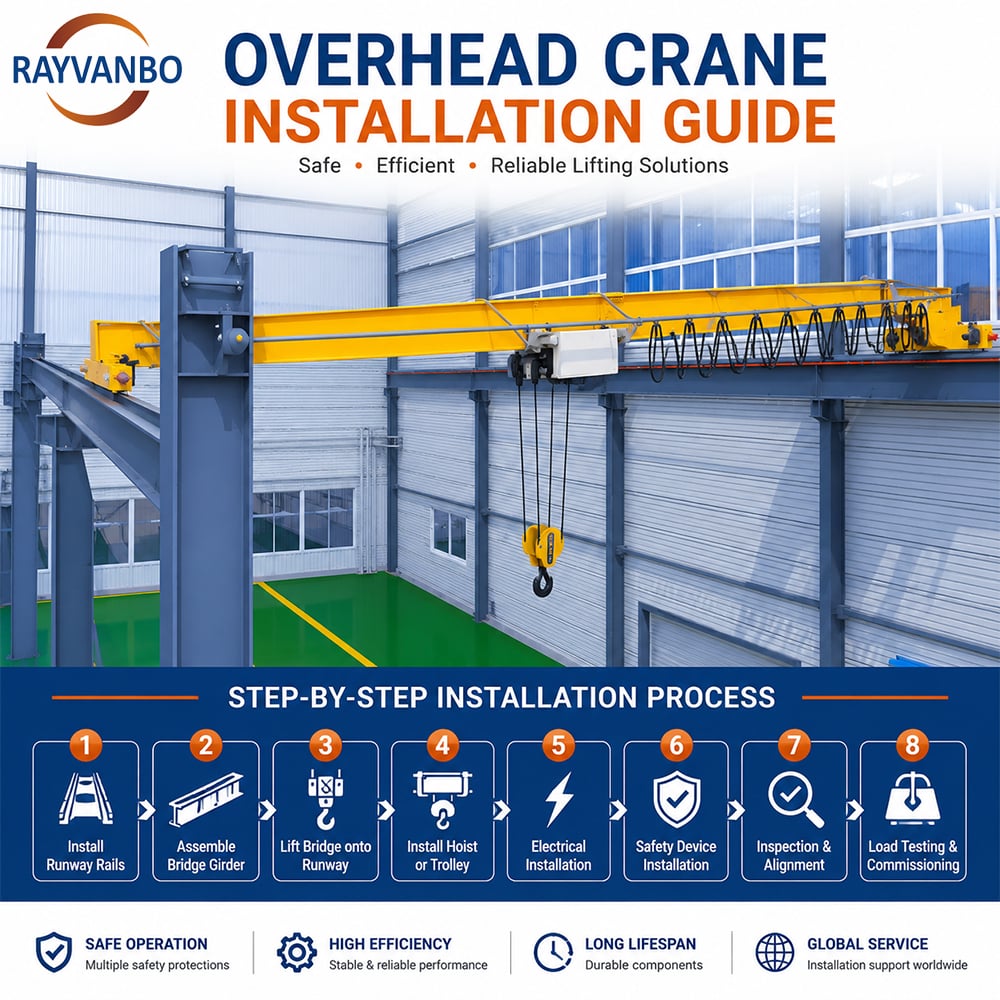
An overhead crane is a lifting system designed to move heavy materials horizontally and vertically inside industrial facilities. The crane typically consists of:
Overhead cranes are widely used in:
Proper installation ensures stable crane operation, accurate load handling, and long-term safety.
Before starting the installation process, several important preparations must be completed.
The building structure must be strong enough to support the crane system and working loads. Engineers should verify:
Incorrect structural design may lead to crane instability or safety risks.
Before installation, inspect all crane components carefully to ensure there is no transportation damage or missing parts.
Main components include:
Any damaged components should be replaced before installation.
The runway rail system is the foundation of the overhead crane.
Installation procedures include:
The runway rails must remain level and parallel to ensure smooth crane travel.
Improper rail alignment can cause:
After installation, rail alignment should be tested carefully.
The bridge girder assembly is usually completed on the ground before lifting.
For single girder cranes:
For double girder cranes:
All structural connections must meet engineering standards.
After bridge assembly is completed, the crane bridge is lifted onto the runway rails using mobile cranes or lifting equipment.
During lifting:
Once positioned on the rails:
Safety supervision is extremely important during this stage.
The next step is installing the hoisting mechanism.
For single girder cranes:
For double girder cranes:
Then connect:
Proper hoist alignment is essential for safe lifting operation.
Electrical installation includes:
Electrical work must comply with local industrial electrical standards.
All wiring connections should be tested before power activation.
Modern overhead cranes require multiple safety protection devices.
Common safety systems include:
These devices help improve operational safety and reduce accident risks.
Before commissioning, technicians should perform a full mechanical inspection.
Inspection items include:
Any abnormal conditions should be corrected immediately.
Load testing is one of the most important installation steps.
The crane is tested under:
Technicians monitor:
Only after successful testing can the crane enter normal operation.
Several issues may occur during crane installation:
Improper rail installation may cause abnormal crane travel and wheel damage.
Incorrect electrical connections can lead to motor failure or safety hazards.
Loose structural bolts may affect crane stability.
Poor hoist alignment can increase wire rope wear and reduce lifting safety.
Safety is the highest priority during overhead crane installation.
Important precautions include:
Professional installation provides several important benefits:
Improper installation may lead to expensive downtime and safety accidents.
For large industrial projects, working with an experienced overhead crane manufacturer or installation contractor is highly recommended.
Installing an overhead crane requires careful planning, precise alignment, professional engineering, and strict safety control. From runway rail installation to electrical commissioning and load testing, every step plays an important role in ensuring reliable crane performance.
Whether you are installing a single girder or double girder overhead crane, following a professional installation process can improve efficiency, reduce maintenance issues, and ensure long-term operational safety.
If you are planning an overhead crane project, choosing an experienced crane manufacturer with installation support can help ensure successful project completion.
Installation time depends on crane size and project complexity. Small cranes may take several days, while large industrial cranes may require several weeks.
Yes. Many overhead cranes can be customized for existing factory buildings after structural evaluation.
Yes. Professional installation helps ensure safety, compliance, and proper crane performance.
Commissioning includes electrical testing, alignment inspection, safety verification, and load testing.
5.How often should overhead cranes be inspected after installation?
Regular inspections should be performed daily, monthly, and annually according to operating conditions and local safety regulations.
Looking for a reliable overhead crane manufacturer and installation partner?
We provide:
Contact us today to get professional overhead crane solutions for your industrial project.
 Hot News
2026-09-21
2026-09-02
2026-08-19
2026-07-15
2026-07-09
2026-07-01
 EN
EN