In modern material handling and lifting applications, electric chain hoists play a critical role in improving efficiency, safety, and precision. Among various hoist solutions available on the market, the HH European type electric chain hoist has become increasingly popular across manufacturing plants, workshops, warehouses, logistics centers, assembly lines, and maintenance facilities. Designed according to European FEM standards, HH electric chain hoists combine compact structure, high reliability, advanced safety systems, and flexible configuration options.
Compared with traditional electric chain hoists, European type electric chain hoists emphasize modular design, lightweight construction, smooth operation, and long service life. HH European type electric chain hoists are available in multiple configurations to suit different application scenarios, including hook type electric chain hoist, manual trolley type electric chain hoist, electric trolley type electric chain hoist, and low headroom electric chain hoist. Understanding the functional differences between these types and how to select the right model is essential for industrial buyers seeking efficient and cost-effective lifting solutions.
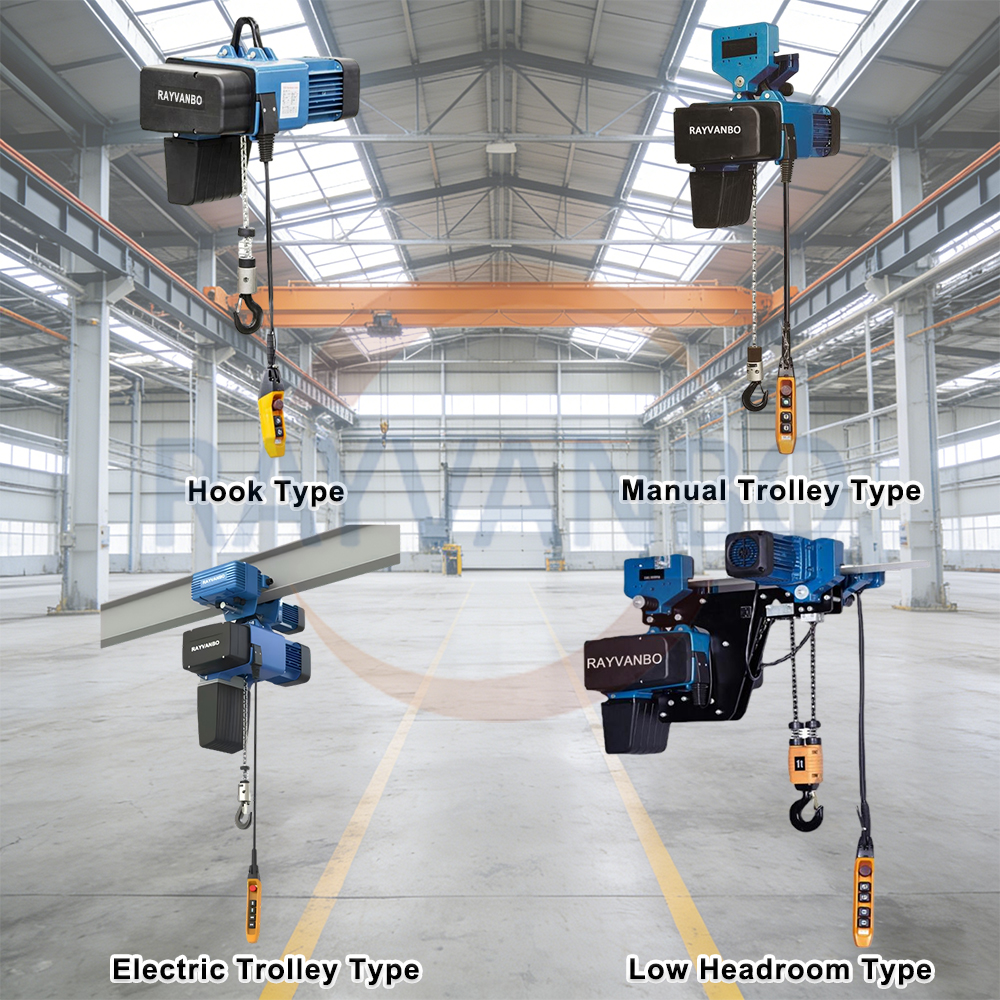
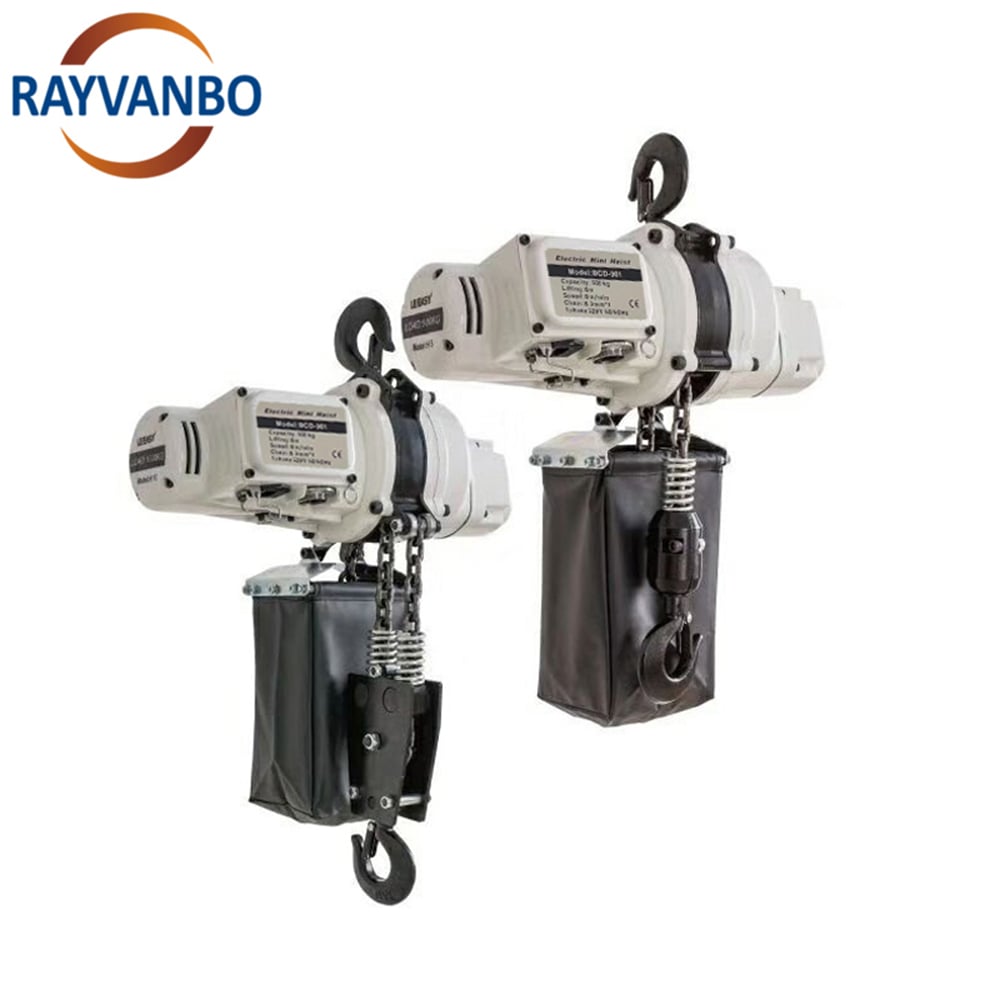
An HH European type electric chain hoist is a lifting device designed and manufactured based on European standards, typically FEM and DIN requirements. It consists of a high-strength lifting chain, compact hoist motor, gearbox, braking system, control unit, and load-bearing housing. The hoist can be operated independently or integrated with crane systems such as overhead cranes, gantry cranes, and jib cranes.
HH electric chain hoists are engineered to deliver precise lifting control, reduced noise, high safety performance, and stable operation. Thanks to their modular design, they can be easily configured with different suspension methods and traveling mechanisms to meet diverse industrial needs.
HH European type electric chain hoists can be categorized into four main types based on suspension and traveling method. Each type offers distinct functional characteristics and application advantages.
The hook type electric chain hoist is the most basic and widely used configuration. It is suspended directly from a fixed support point such as a beam, bracket, or crane hook. The hoist remains stationary during operation, lifting and lowering loads vertically within a defined working area.
Hook type HH electric chain hoists are commonly used in workshops, maintenance stations, production lines, and assembly areas where lifting points are fixed. Their simple structure makes installation quick and cost-effective, while European design ensures smooth operation and reliable braking performance. This type is ideal for applications requiring vertical lifting without horizontal movement.
From a functional perspective, hook type electric chain hoists offer high lifting accuracy and minimal maintenance requirements. They are suitable for light to medium-duty lifting tasks and are often used as standalone lifting solutions or as auxiliary equipment.
A manual trolley type electric chain hoist is mounted on a manual push or hand-chain trolley that travels along an I-beam or H-beam. Horizontal movement is achieved by manually pushing the load or operating the hand chain, while vertical lifting is powered electrically.
This configuration provides greater flexibility than hook type hoists by enabling limited horizontal movement without requiring an electric traveling system. Manual trolley type HH electric chain hoists are commonly used in workshops, warehouses, and small production lines where load positioning accuracy is required but travel frequency is low.
The key advantage of the manual trolley type is its balance between functionality and cost. It offers improved coverage compared with fixed hook hoists while maintaining a relatively simple structure and low investment cost.
The electric trolley type HH electric chain hoist is equipped with a motorized trolley that allows powered horizontal movement along a beam. Both lifting and traveling functions are electrically driven, enabling precise load positioning across a wider working area.
Electric trolley type hoists are widely used in overhead cranes, gantry cranes, and jib cranes where frequent lifting and traveling operations are required. This configuration significantly improves efficiency in material handling tasks, especially in assembly lines, machining workshops, and logistics facilities.
From an operational standpoint, electric trolley type HH electric chain hoists provide smooth acceleration, precise stopping, and reduced load swing. Advanced control systems and variable frequency drives further enhance safety and operator comfort.
The low headroom electric chain hoist is a specialized configuration designed for facilities with limited vertical space. By optimizing the arrangement of the motor, gearbox, and chain guide, low headroom HH electric chain hoists achieve maximum lifting height within the same building constraints.
Low headroom designs are particularly suitable for workshops with low ceilings, existing buildings undergoing upgrades, and applications where maximizing hook height is critical. These hoists are often combined with electric trolleys and used in single girder overhead cranes.
The main functional advantage of the low headroom HH electric chain hoist is space efficiency. It allows users to lift loads higher without modifying the building structure, resulting in significant cost savings.
Although all HH European type electric chain hoists share the same core lifting mechanism, their functional differences become evident in terms of mobility, installation requirements, working coverage, and application suitability. Hook type hoists focus on vertical lifting, manual trolley types provide basic horizontal movement, electric trolley types enable fully powered travel, and low headroom types optimize lifting height in constrained spaces.
These differences directly affect productivity, operator convenience, and overall system efficiency. Selecting the right type depends on specific operational needs rather than lifting capacity alone.
Comparison Item |
Hook Type |
Manual Trolley Type |
Electric Trolley Type |
Low Headroom Type |
Horizontal Movement |
None |
Manual |
Electric |
Electric |
Installation |
Fixed suspension |
Beam-mounted |
Beam-mounted |
Crane-integrated |
Space Requirement |
Standard |
Standard |
Standard |
Minimal headroom |
Operating Efficiency |
Moderate |
Moderate |
High |
High |
Typical Application |
Fixed lifting points |
Light travel tasks |
Frequent lifting and travel |
Low ceiling workshops |
Cost Level |
Lowest |
Low |
Medium |
Medium to high |
Choosing the correct HH electric chain hoist requires a comprehensive evaluation of application requirements. Lifting capacity and lifting height are fundamental parameters, but they should be considered alongside working environment, travel distance, frequency of use, and space limitations.
For fixed lifting stations with minimal movement, a hook type electric chain hoist offers simplicity and cost efficiency. When limited horizontal movement is required without high travel frequency, a manual trolley type provides a practical solution. For high-efficiency production lines and frequent material handling tasks, an electric trolley type HH electric chain hoist delivers superior performance. In facilities with restricted vertical clearance, a low headroom electric chain hoist is the optimal choice.
Power supply, control method, safety requirements, and integration with existing crane systems should also be evaluated during the selection process. Consulting with experienced manufacturers or suppliers ensures proper configuration and long-term reliability.
Safety is a key advantage of European type electric chain hoists. HH electric chain hoists are equipped with overload protection devices, reliable electromagnetic braking systems, upper and lower limit switches, and thermal motor protection. These features minimize the risk of accidents caused by overloading, misoperation, or component failure.
Smooth start and stop functions reduce mechanical shock and extend service life. Low noise operation and compact housing improve operator comfort and workplace safety. Regular inspection and preventive maintenance further enhance operational reliability.
HH electric chain hoists are widely used in manufacturing workshops, automotive plants, warehouses, logistics centers, maintenance stations, and assembly lines. They are commonly integrated into overhead cranes, gantry cranes, jib cranes, and monorail systems. Their versatility and modular design make them suitable for both light-duty and medium-duty industrial lifting applications.
What is the main advantage of HH European type electric chain hoists?
They offer compact design, high safety performance, smooth operation, and long service life in compliance with European standards.
Which HH electric chain hoist type is best for limited space?
The low headroom electric chain hoist is specifically designed for low ceiling environments.
Can HH electric chain hoists be customized?
Yes. Capacity, lifting height, control method, and trolley configuration can be customized.
Are HH electric chain hoists suitable for overhead cranes?
Yes. Electric trolley and low headroom types are widely used in overhead crane systems.
HH European type electric chain hoists provide a comprehensive and flexible lifting solution for modern industrial material handling. With multiple configurations including hook type, manual trolley type, electric trolley type, and low headroom type, HH electric chain hoists can be tailored to meet diverse application needs. By understanding their functional differences and selection principles, industrial buyers can choose the most suitable hoist solution to improve efficiency, safety, and long-term operational value.
 Hot News
2026-09-21
2026-09-02
2026-08-19
2026-07-15
2026-07-09
2026-07-01
 EN
EN