In today’s industrial environment, material handling efficiency and workplace safety have become critical factors influencing productivity and competitiveness. Overhead cranes are widely used in manufacturing plants, warehouses, workshops, logistics centers, power plants, steel mills, and automotive assembly lines. As industrial standards continue to evolve, traditional overhead cranes are increasingly unable to meet modern requirements for efficiency, energy consumption, precision, and safety. Against this background, European type overhead cranes have rapidly gained popularity worldwide.
European type overhead cranes, also known as European style overhead cranes, are designed based on FEM standards and advanced engineering concepts. Compared with conventional overhead cranes, they feature a lightweight structure, compact design, high operating efficiency, low energy consumption, and enhanced safety performance. These advantages make European overhead cranes an ideal solution for industrial buyers seeking long-term value, reliable operation, and compliance with international safety standards.
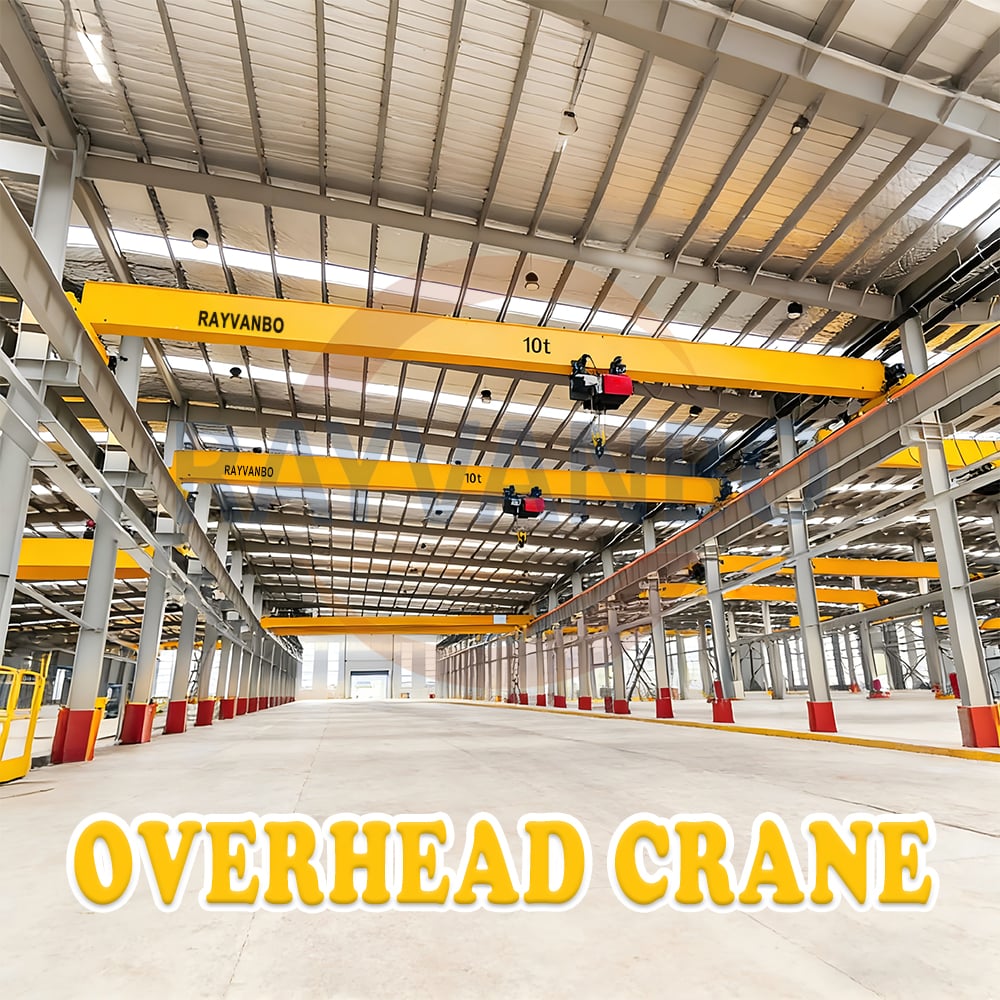
A European type overhead crane is a modern bridge crane system developed according to European FEM design standards. It integrates optimized steel structures, modular components, precision drive units, advanced electrical systems, and intelligent control technology. European overhead cranes can be configured as single girder overhead cranes or double girder overhead cranes, depending on lifting capacity, span, and application requirements.
Unlike traditional overhead cranes that rely on heavier steel structures and basic control systems, European type overhead cranes focus on performance optimization and lifecycle efficiency. Each component, from the crane girder and hoisting mechanism to the trolley and end trucks, is designed to minimize weight while maximizing strength, stability, and durability.
One of the most significant advantages of European type overhead cranes is their lightweight structure. By using high-strength steel and optimized box girder designs, European overhead cranes achieve the same or higher lifting capacity with reduced self-weight. This lightweight design reduces the load imposed on the building structure, allowing for more economical steel construction and lower foundation costs.
In many workshops, limited headroom is a major constraint. European overhead cranes feature compact hoisting mechanisms and low headroom designs, enabling higher lifting heights within the same building. This is especially beneficial for factories seeking to maximize vertical space utilization without costly building modifications.
European overhead cranes are equipped with advanced variable frequency drives and precision gearboxes that ensure smooth acceleration, deceleration, and precise positioning. Accurate load handling reduces cycle time and improves production efficiency, particularly in high-frequency lifting operations such as assembly lines, machining centers, and logistics sorting areas.
Smooth crane operation also minimizes load swing, reducing the risk of damage to goods and improving overall workplace safety. For industries that require precise material positioning, such as automotive manufacturing and equipment assembly, European type overhead cranes provide a significant performance advantage.
Energy efficiency is a key consideration for modern industrial facilities. European type overhead cranes are designed with optimized motors, efficient transmission systems, and regenerative braking technology. These features significantly reduce power consumption compared with traditional overhead cranes.
Lower energy usage not only reduces operating costs but also supports sustainability goals and compliance with environmental regulations. As more companies focus on reducing carbon footprints and improving energy efficiency, European overhead cranes offer a future-proof lifting solution.
Safety is a core design principle of European type overhead cranes. Multiple integrated safety devices are standard features, including overload protection systems, upper and lower limit switches, emergency stop functions, phase loss protection, and reliable braking mechanisms. These systems work together to prevent accidents caused by overload, misoperation, or equipment failure.
Smooth starting and stopping reduce mechanical stress and impact forces on both the crane structure and the lifted load. Lower noise levels and reduced vibration improve operator comfort and contribute to a safer working environment. Compared with traditional overhead cranes, European type overhead cranes significantly reduce operational risks.
European overhead cranes are manufactured using high-quality components and standardized modular designs. This ensures stable performance, longer service life, and simplified maintenance procedures. Modular components can be easily replaced or upgraded, reducing downtime and spare parts inventory.
Although the initial investment for a European type overhead crane may be higher than that of a traditional crane, the total cost of ownership is typically much lower. Reduced energy consumption, fewer breakdowns, and lower maintenance costs result in significant long-term savings for industrial users.
European type overhead cranes offer excellent adaptability to different industrial applications. They can be customized according to lifting capacity, span, lifting height, speed, control method, and working environment. Whether used in light-duty workshops or heavy-duty industrial plants, European overhead cranes can be tailored to meet specific operational requirements.
The following table provides a clear comparison between European type overhead cranes and traditional overhead cranes, helping buyers understand the key differences.
Comparison Item |
European Type Overhead Crane |
Traditional Overhead Crane |
Design Standard |
FEM European standard |
Conventional standard |
Structure Weight |
Lightweight optimized design |
Heavy steel structure |
Operating Control |
VFD precise control |
Basic control |
Energy Consumption |
Energy-saving system |
Higher power usage |
Noise Level |
Low noise operation |
Higher noise |
Maintenance Cost |
Lower long-term cost |
Higher maintenance cost |
Safety System |
Advanced integrated safety |
Basic safety devices |
Service Life |
Long and reliable |
Shorter lifespan |
European type overhead cranes are designed for efficient installation and easy maintenance. Modular components allow faster assembly and precise alignment, reducing installation time and labor costs. For existing workshops, the lightweight structure makes retrofitting easier, often without the need for major building reinforcement.
Maintenance tasks are simplified due to standardized components and clear maintenance access points. Regular inspection, lubrication, and preventive maintenance can be performed efficiently, ensuring stable operation and minimizing unexpected downtime.
To fully realize the benefits of European type overhead cranes, proper operation and safety management are essential. Operators must receive professional training and certification before using overhead cranes. Understanding crane load charts, operating procedures, and emergency response measures is critical for safe operation.
Overloading must be strictly avoided, as it poses serious risks to both equipment and personnel. Lifting operations should always stay within the rated capacity of the crane and hoisting mechanism. Clear lifting zones should be established, and unauthorized personnel should be kept away from crane operating areas.
Routine inspection of key components such as wire ropes, hooks, brakes, limit switches, and electrical systems is essential. Any abnormal noise, vibration, or malfunction should be addressed immediately. Scheduled preventive maintenance and regular safety audits help identify potential issues before they lead to accidents.
European type overhead cranes are widely used across various industries due to their versatility and performance advantages. In manufacturing workshops, they support efficient material handling and assembly operations. In warehouses and logistics centers, they improve storage efficiency and reduce manual handling.
In steel plants and power stations, European overhead cranes handle heavy loads with high reliability and safety. In automotive factories, precise positioning and smooth operation support high-quality assembly processes. Their adaptability makes European overhead cranes suitable for both light-duty and heavy-duty applications.
Are European type overhead cranes more expensive than traditional cranes?
The initial purchase cost is usually higher, but the total cost of ownership is lower due to energy savings, reduced maintenance, and longer service life.
Can European overhead cranes be installed in existing buildings?
Yes. Their lightweight and compact design makes them ideal for retrofitting existing workshops with minimal structural modification.
Which industries benefit most from European type overhead cranes?
Manufacturing, automotive, logistics, steel, power plants, and warehousing industries benefit greatly from improved efficiency and safety.
Are European overhead cranes customizable?
Yes. They can be customized to meet specific lifting capacity, span, speed, and control requirements.
European type overhead cranes represent the future of industrial material handling. Their lightweight structure, high operating efficiency, energy-saving performance, advanced safety systems, and long service life provide unmatched value for industrial buyers. By investing in European overhead crane solutions and following proper safety practices, companies can significantly improve productivity, reduce operating costs, and create a safer, more efficient working environment.
 Hot News
2026-09-21
2026-09-02
2026-08-19
2026-07-15
2026-07-09
2026-07-01
 EN
EN