Lifting equipment such as electric hoists, cranes, and rigging systems plays a crucial role in industrial operations. These machines are designed to handle heavy loads efficiently, but over time, they are exposed to wear, improper use, and environmental conditions that may lead to failure.
When lifting equipment fails, it can result in serious consequences, including workplace accidents, production downtime, and increased maintenance costs. For businesses relying on material handling, understanding potential failures is essential for maintaining both safety and efficiency.
This guide explains the most common lifting equipment failures and their causes, along with practical ways to prevent them.
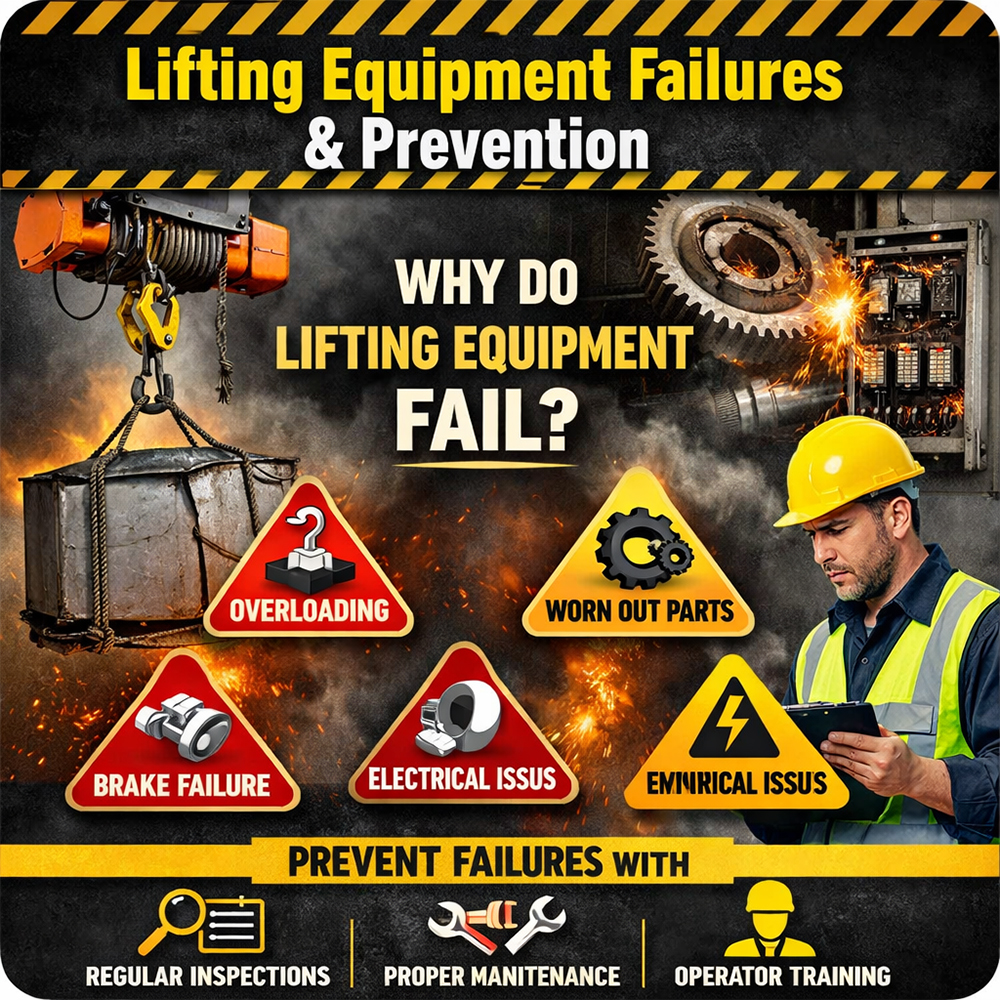
Most equipment failures develop gradually rather than occurring suddenly. They are often caused by a combination of operational mistakes and lack of maintenance.
Key contributing factors include:
By identifying these issues early, companies can significantly reduce downtime and avoid costly repairs.
Overloading is one of the most common causes of lifting equipment failure. When the load exceeds the rated capacity, it places excessive stress on structural components, motors, and brakes.
Main causes:
Risks:
Prevention:
Follow load ratings strictly, train operators properly, and install overload protection devices.
Lifting equipment operates under repeated stress, which leads to wear and fatigue over time. Components such as wire ropes, chains, hooks, and gears are especially vulnerable.
Main causes:
Risks:
Prevention:
Conduct regular inspections, ensure proper lubrication, and replace worn parts promptly.
The brake system is critical for controlling and holding loads. Failure in this system can create dangerous situations.
Main causes:
Risks:
Prevention:
Inspect brakes regularly and replace worn components. Avoid overloading to reduce stress on the system.
Electrical failures are common in electric hoists and crane systems. These issues can interrupt operations or create safety hazards.
Main causes:
Risks:
Prevention:
Use high-quality electrical components, protect systems from harsh environments, and perform routine inspections.
Motors and gearboxes are essential for lifting performance. Damage to these components can reduce efficiency or cause complete failure.
Main causes:
Risks:
Prevention:
Maintain proper lubrication, perform alignment checks, and avoid exceeding load limits.
Poor maintenance practices are a major cause of lifting equipment failure. Without a structured plan, minor issues can quickly become serious problems.
Main causes:
Risks:
Prevention:
Implement a preventive maintenance schedule and keep detailed records.
Before major failures occur, lifting equipment usually shows early warning signs.
Common indicators include:
Early detection allows timely action and prevents costly breakdowns.
To improve reliability and safety, businesses should adopt a proactive approach:
Preventive maintenance is always more cost-effective than reactive repairs.
1. What is the most common lifting equipment failure?
Overloading and component wear are the most frequent causes.
2. Can lifting equipment failures be prevented?
Yes, with proper operation, regular inspection, and maintenance.
Lifting equipment failures can lead to serious safety and operational issues, but most of them are preventable. By understanding common causes such as overloading, wear, brake failure, and poor maintenance, businesses can take effective action to improve reliability.
Investing in proper training and maintenance ensures long-term performance, safety, and cost efficiency.
Looking to improve your lifting equipment performance and safety?
Contact us today to find the right solution for your application.
 Hot News
2026-09-21
2026-09-02
2026-08-19
2026-07-15
2026-07-09
2026-07-01
 EN
EN