 EN
EN


Structural Design and Rigidity of Overhead Bridge Cranes
Beam Configuration, Trolley Support, and Lateral Stability
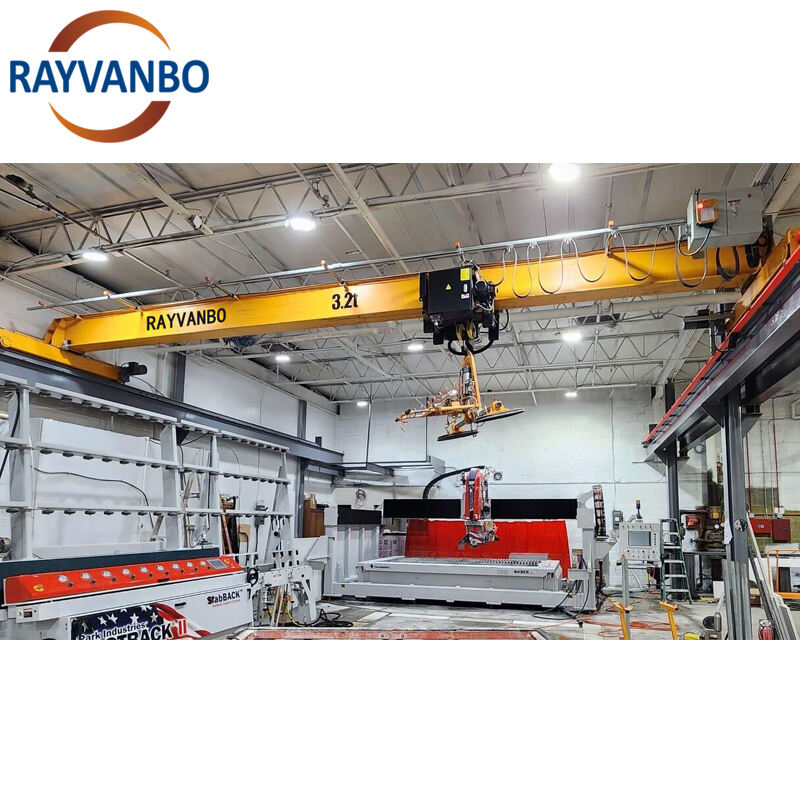
Single girder overhead bridge cranes have just one main beam with a trolley hanging underneath. This setup saves space in the headroom area but doesn't handle heavy loads or off-center weights very well when it comes to staying stable sideways. Double girder models work differently. They use two parallel beams that support a trolley running on top. The whole thing forms a sort of rigid box shape which fights against twisting and reduces side-to-side movement during lifting operations something really important when doing precise lifts. For most standard applications, rolled steel girders will do the job just fine. But when dealing with long spans over 30 meters, fabricated box girders made by welding together plates of steel offer much better stiffness. Where the trolley is mounted makes all the difference too. Double girder systems with top running trolleys keep their tracks aligned properly without drifting. Single girder setups with underslung trolleys tend to wander off course laterally and need regular adjustments to stay centered.
Deflection Control and Duty Class Compatibility (M3–M6)
How much a bridge sags vertically when loaded, known as deflection, plays a major role in determining both safety and how long equipment will last before needing replacement. Most single girder cranes tend to deflect around L/450 which limits their use mainly to lighter duty categories like M3 and M4 where annual lift counts stay below 5,000. Double girder systems offer better control, usually keeping deflection below L/800 thanks to features such as two separate load paths, stronger web stiffening structures, and built-in redundancies. This makes them suitable for heavier operations rated at M5 and M6 levels with over 20,000 lifts per year. Take a typical case: a 25 ton double girder crane covering 40 meters shows no more than 50mm of sag even when fully loaded, meeting all ISO 8686-1 standards for handling moving loads. Tests on thermal fatigue show these double girder models can handle about 65% more work cycles compared to similar single girder setups before showing signs of wear, which is why they're preferred in settings requiring constant heavy lifting operations.
Load Capacity, Span, and Hook Height Performance
Lifting Range and Span Limitations: Single-Girder (≤20t) vs. Double-Girder (20t–200t+)
Single girder cranes work best when handling loads up to around 20 metric tons, with span lengths typically not exceeding 30 meters. These are commonly used in places where lighter operations take place such as small manufacturing facilities, warehouses for distribution, and basic assembly work. On the other hand, double girder models can handle much heavier weights starting from 20 tons all the way up past 200 tons, and they manage longer distances too since the weight gets spread between two main structural components. The way these cranes distribute stress makes them capable of keeping deflection below L/1000 even when carrying full loads, which satisfies those strict requirements set forth by ISO standard 16881 from 2022. Because of this performance advantage, many industrial sectors including steel mills, shipyards, and factories making large machinery tend to go with double girder options even though they cost more upfront.
Vertical Clearance Trade-offs: Headroom Requirements and Effective Hook Height
How we set up those steel girders makes all the difference when it comes to vertical space limitations. With single girder cranes, we typically save around 18 to 30 centimeters of headroom because the hoist sits beneath the main beam. This gives us better hook reach in buildings where the ceiling isn't very tall. On the flip side, double girder systems need higher runways but allow the trolley to move freely between beams. This becomes really important when dealing with big awkward loads like turbine parts or prefab construction sections. Sure, these dual beam setups cut down on usable hook height by roughly 12 to 18 inches compared to their single beam counterparts, but many warehouses find the extra vertical lifting power worth it in taller spaces. A recent study from the Material Handling Institute backs this up too. Before making any final decisions though, site engineers should always check three things first: actual building height, how far the hook needs to travel, and what kind of shapes those loads will be.
Total Cost of Ownership and Facility Integration
Capital Investment, Structural Support Needs, and Installation Complexity
When looking at total cost of ownership for overhead bridge cranes, most people forget about all the hidden expenses after the initial purchase. Single girder models typically cost between $15,000 to $50,000. These work fine for occasional jobs or light lifting tasks. But here's the catch – they just aren't built to handle heavy duty operations over time. The structural design limits what these cranes can do in tougher industrial settings. Double girder systems run anywhere from $30k up to over $200k. Sure, they require more money upfront, but they last longer and need less repair work throughout their lifespan. Facilities operating under M5 or M6 conditions will find these systems much more reliable day after day without constant breakdowns.
- Structural Modifications: Double-girder installations typically require reinforced columns, deeper foundations, and upgraded runway beams–adding 20–40% to installation costs versus minimal facility upgrades for single-girder setups.
- Headroom Impact: Single-girder designs preserve vertical space; double-girder systems sacrifice usable hook height, influencing layout flexibility in constrained facilities.
- Maintenance & Longevity: Double-girder cranes demonstrate significantly lower failure rates and repair frequency over time, particularly in high-cycle operations–offsetting higher initial costs within 3–5 years for M5/M6 applications.
Electrical integration, runway alignment, and commissioning complexity further affect TCO. A holistic assessment–factoring in duty cycle, expected lifespan, and facility adaptability–prevents costly retrofits and ensures optimal alignment between crane performance and operational demands.
Application-Specific Suitability for Overhead Bridge Cranes
Matching Girder Type to Duty Cycle, Industry Use Case, and Operational Demands
Choosing the right girder setup depends on several connected considerations including how intense the duty cycle is according to ISO 4301 standards, what kind of environment and loads the industry faces, plus any limitations within the facility itself. Single girder models work best for M3 through M4 tasks typically found in places like warehouses, doing lighter assembly work, or packaging operations where saving money matters, conserving space is important, and dealing with average weight loads suffices. On the other hand, double girder systems are built specifically for heavier duty applications rated at M5 to M6 levels. These provide greater structural strength against wear and tear while handling much larger weights required by industries such as steel production plants, shipbuilding yards, and even those involved in making aircraft components.
Operational context further refines selection:
- High-Temperature Environments: Foundries operating above 400°C require double-girder cranes with heat-resistant materials and thermal expansion allowances.
- Precision Positioning: Automotive and electronics assembly benefit from the agility and lower inertia of single-girder systems–especially when integrated with anti-sway or servo-controlled hoists.
- Space Constraints: Narrow workshops or retrofit projects favor single-girder cranes due to minimal headroom and column loading requirements.
Industry Application Guide:
| Sector | Girder Type | Rationale |
|---|---|---|
| Warehousing | Single-Girder | Cost-effective for ≤20t, M3–M4 loads and limited headroom |
| Aerospace Assembly | Double-Girder | Supports M5 cycles, precise handling of large airframe sections |
| Steel Fabrication | Double-Girder | Handles 50t+ loads and withstands thermal cycling and abrasive conditions |
Facility height, automation readiness (e.g., integration with PLCs or crane management software), and maintenance accessibility also influence suitability. As highlighted in the 2023 Material Handling Institute study, 68% of avoidable crane-related operational failures stem from mismatched girder selection–reinforcing that application-aligned engineering, not just capacity or budget, defines long-term reliability.
Frequently Asked Questions
What is the difference between single girder and double girder cranes?
Single girder cranes have one main beam, suitable for lighter loads up to 20 tons and save headroom space, while double girder cranes have two beams allowing for heavier loads over 200 tons and provide better stability and span width.
What are the cost implications for these cranes?
Single girder cranes range from $15,000 to $50,000 and are cost-effective for light-duty tasks, while double girder cranes can exceed $200,000 but offer reliability and lower maintenance costs in heavy-duty operations.
When should I choose a double girder system?
Double girder systems are ideal for facilities handling heavy loads, requiring enhanced stability, minimal deflection, and long-span capability, especially in industries like steel fabrication and aerospace assembly.
How does facility height influence crane type choice?
Single girder systems save headroom and are suitable for lower ceiling spaces, whereas double girder cranes require more vertical clearance but allow more hook height for tall spaces.