 EN
EN


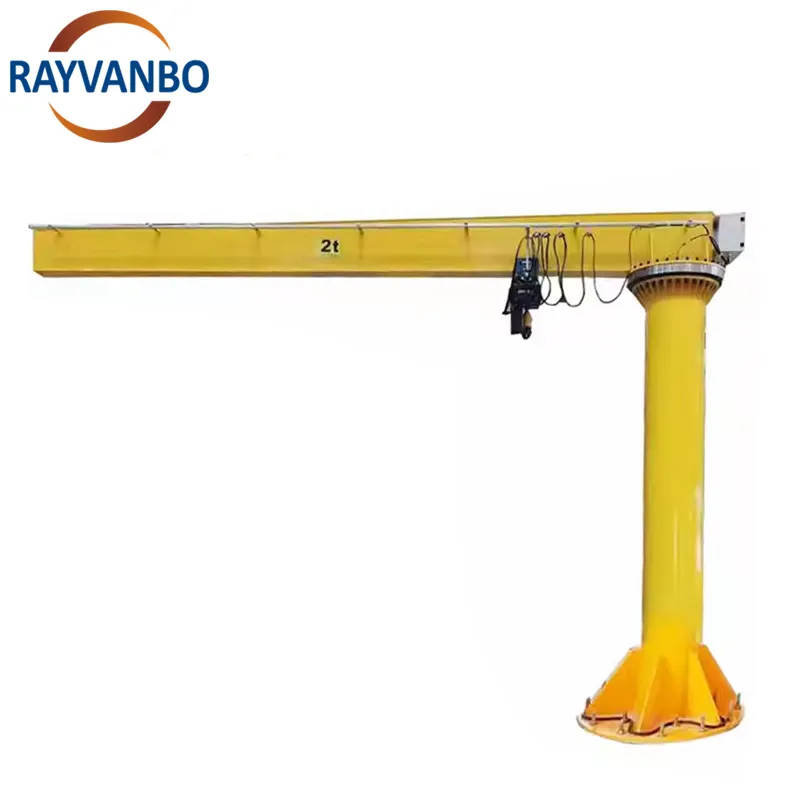
Core Structural Specifications for High-Cycle JIB Crane Performance
Load Capacity Sizing Aligned with Duty Cycle and ISO/EN Service Classification
Selecting appropriate load capacity requires analysis beyond peak weight. Underestimating dynamic forces during repetitive lifts reduces service life by 30–40% (Lifting Equipment Engineers Association 2023). JIB cranes designed for high-cycle operations must align with ISO 4301/EN 13001 service classifications:
- Class D (FEM 1Am) for 200–500 lifts/day
- Class E (FEM 2m) for 500 lifts/hour
Overloading class B mechanisms in continuous workflows causes premature bearing failure within six months. Always apply a 20% safety margin above operational loads and verify third-party testing certifications—particularly for hoist motors, boom welds, and pivot bearings.
Height-Under-Boom (HUB) and Hook Height Trade-offs for Clearance, Lift Depth, and Operator Ergonomics
Optimizing HUB involves balancing three constraints:
- Clearance – Minimum 18" gap below ceiling utilities
- Lift Depth – Hook reach must access deepest pallets or workstation levels
- Ergonomics – Trolley height ~ 5'6" for manual pulling to avoid overhead reaching
Inadequate HUB forces operators into overhead reaching postures, increasing injury risk by 60% (OSHA 2022). For deep-lift applications, extendable hooks or telescopic booms maintain neutral posture while achieving up to 20' lift depth. Measure both vertical travel and horizontal reach during planning—never assume standard boom geometry fits all station heights.
Ergonomic and Safety-Centric JIB Crane Design for Repetitive Use
Repetitive lifting operations demand specialized JIB crane configurations that prioritize operator safety and reduce cumulative physical strain. Proper integration of ergonomic principles directly impacts both productivity and injury prevention in high-frequency material handling environments.
Hoist Placement, Trolley Path, and Control Layout to Minimize Musculoskeletal Strain
Getting the hoist and trolley path positioned right makes all the difference when it comes to those repetitive tasks where workers end up stretching too far, twisting their bodies, or lifting overhead constantly. A good workflow analysis will find these sweet spots for pivot points. When controls sit inside what operators call their "sweet spot" area, there's less need for those uncomfortable shoulder bends and back strains. The trolley rails should follow the same curves as how loads typically move around the workspace, so nobody has to make sudden direction changes that just wear them out faster. Some real-world testing has shown that workplaces which cut down on awkward positions by about 40 percent tend to see injury rates drop somewhere between 25 and 35 percent according to recent research from Ergonomics Journal last year.
Critical Safety Systems: Duty-Rated Limit Switches, Overload Protection, and Redundant Emergency Stops
When equipment runs through repetitive duty cycles day after day, safety parts need to go beyond regular industrial specs. The triple redundant limit switches are essential for stopping those runaway trolleys that happen so often when systems rotate hundreds of times each workday. Meanwhile, hydraulic overload protectors designed for ISO M6 rating handle heavy continuous service loads, shutting down operations safely once they hit 110% capacity. Emergency stop circuits also play their part here. These circuits run on separate pathways and get checked every week as part of routine diagnostics, which helps cut down on electrical failures that could otherwise cause major problems on the factory floor.
Power and Control Systems Engineered for Reliable Repetitive Operation
Electric vs. Pneumatic Hoists: Duty Cycle Compatibility, Maintenance Frequency, and Energy Efficiency
When choosing between different hoist technologies for repetitive JIB crane work, there are really three main things worth looking at. Electric hoists tend to be much better when it comes to energy efficiency. They convert well over 90% of their input power into actual lifting force, which makes them great for applications that run constantly throughout the day with little wasted energy. Pneumatic options do have their advantages though, especially in areas where explosions might be a concern. However, they suffer from significant losses in efficiency during air compression processes, typically wasting somewhere between 30 to 50% of their energy according to Industrial Power Review from 2022. Maintenance requirements differ quite a bit too. Electric systems generally need servicing about half as often as pneumatic ones because of their sealed motor designs and brushless construction. Pneumatic units on the other hand demand regular attention, including replacing diaphragms every quarter and keeping an eye on moisture levels in those air lines. When dealing with heavy duty applications classified under ISO M6 standards (that's around 1,600 cycles per hour), electric hoists keep delivering steady torque without any noticeable drop off in performance. Pneumatic versions can struggle with pressure fluctuations after prolonged periods of operation. Anyone making this decision needs to weigh all these factors against what matters most for their specific situation, whether it's the cost of setting up compressed air systems or the expense involved in retrofitting existing facilities for electricity.
FAQ
What are the service classifications for JIB cranes in high-cycle operations?
JIB cranes for high-cycle operations align with ISO 4301/EN 13001 classifications: Class D for 200–500 lifts/day and Class E for over 500 lifts per hour.
What is the importance of HUB in JIB crane design?
Height-Under-Boom (HUB) optimization balances clearance, lift depth, and ergonomics, reducing injury risk by 60% when properly set.
How does rotation capability affect JIB crane efficiency?
360° rotation enables full repositioning, enhancing process efficiency by reducing cycle times, while limited-arc configurations are more cost-effective for linear production lines.
Which hoist is more energy-efficient: electric or pneumatic?
Electric hoists are more energy-efficient, converting over 90% of input power to lifting force, in contrast to pneumatic models which waste 30-50% during air compression.