 EN
EN



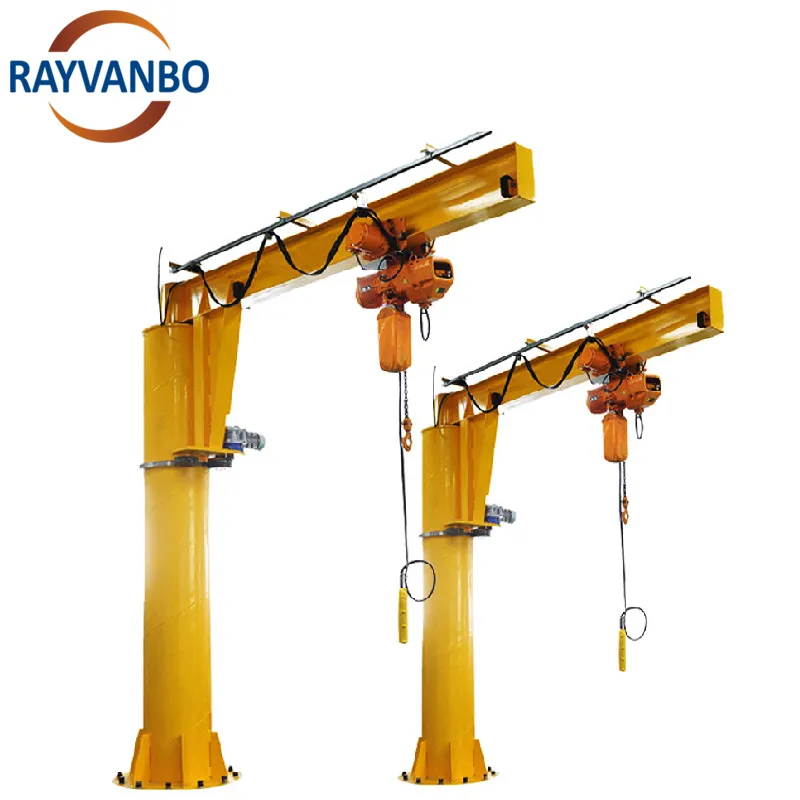
Jib Crane Fundamentals: Design Types and Core Industrial Capabilities
Jib cranes really boost how materials get moved around in factories and warehouses because they provide spot-on lifting where it's needed most. The way these cranes are built determines what they can do. Freestanding models let workers rotate all the way around 360 degrees and handle heavier stuff, sometimes as much as 20 tons. Wall mounted versions save valuable floor space while still giving good coverage with rotations between 180 to 200 degrees, though they're better suited for lighter loads usually under 5 tons. According to various industry reports, when companies properly install and use jib cranes, they tend to cut down on the time spent moving equipment around by about 40 percent. That kind of improvement translates directly into better overall productivity across manufacturing operations.
| Design Type | Rotation | Footprint | Typical Capacity | Primary Industrial Use |
|---|---|---|---|---|
| Freestanding Jib | 360° | Requires foundation | Up to 20 tons | Foundries, open warehouse bays |
| Wall-Mounted | 180°–200° | Zero floor obstruction | Up to 5 tons | Assembly lines, tight workshops |
| Articulating (Portable) | 270°+ | Compact/mobile base | Up to 2 tons | Maintenance bays, confined areas |
Articulating jib cranes really shine when it comes to retrofitting old facilities where they can maneuver past all sorts of obstacles in maintenance areas. Portable models are great for setting up temporary workstations without going through the hassle of permanent installations. The difference between these options lets plant managers match their lifting needs to what actually fits within their workspace. Think about situations where ceiling heights are super tight or when automotive assembly lines need parts positioned down to the millimeter level. When picking out the right system, companies have to weigh space restrictions against what kind of loads they'll be handling day to day. Safety remains top priority of course, but getting the balance right between accuracy and production speed makes all the difference in meeting those daily output targets.
Jib Cranes in Maintenance Operations: Safety, Access, and Retrofit Efficiency
Power Equipment Overhaul and Ship Repair Using Fixed and Articulating Jib Cranes
In places where regular maintenance work happens, such as power substations and shipyards, both fixed and articulating jib cranes play a vital role. Fixed models can handle around 2 tons of weight when replacing turbines, whereas those articulating ones manage tight spaces inside ship engine compartments, rotating almost three quarters of a circle. This capability cuts down on dangerous manual lifting tasks and studies show it actually lowers workplace back injuries by about 43 percent according to NIOSH research from last year. What makes these cranes so useful is their small size that fits into older buildings without needing major changes to structures. Most installations happen during planned maintenance periods through simple bolt-on methods either attached to solid concrete bases or mounted onto available steel supports already there.
Mold Installation and Commissioning in High-Precision Tooling Facilities
For shops working on really precise tools, jib cranes make all the difference when it comes to getting those molds positioned down to the micron level. These cranes come equipped with variable speed hoists and rotation locks that let operators handle things just right. When lowering those massive injection molds onto their mounting plates, operators need total control over how fast they come down to avoid any misalignment issues which can mess up entire batches of products. Another big plus is the space underneath the jib beam itself. This extra headroom means taller presses can fit without having to tear apart existing structures in the facility. Plus, most modern setups now include wireless remotes so workers don't have to stand in dangerous areas while operating them. Setup times actually drop around 30% compared to old school forklift approaches because everything's accessible from above. And there are these built-in load sensors too that give instant readings during setup work. This kind of feedback loop is absolutely essential if a shop wants consistent results across different product runs.
Jib Cranes in Assembly Processes: Precision Positioning and Line Integration
Automotive Sub-Assembly and General Assembly Material Handling
In automotive manufacturing, jib cranes play a key role when it comes to placing heavy parts like engines, transmission units, and chassis components within tight tolerances of about 2mm. Getting this right matters a lot because even small misalignments can lead to expensive fixes down the line. The wall mounted versions save valuable factory floor space while still managing weights as high as five tons. According to recent OSHA compliant safety reports from last year, these systems cut down on workplace injuries related to lifting by roughly half. Articulating models offer additional benefits too. They move easily past robotic workstations and conveyor belts without needing extra building support or causing production delays that often happen during traditional overhead crane installations.
Motorized Jib Systems for Repeatable, Ergonomic Component Placement
Motorized jib cranes elevate ergonomics and repeatability in assembly through programmable lift paths, speed control, and intelligent safety features:
- Regenerative braking systems, which cut energy consumption by 30% during repetitive lifts
- Anti-sway technology, stabilizing delicate electronics or glass panels during transfer
- Adjustable height limits, allowing operators to position components at optimal working levels
These systems eliminate manual pushing/pulling of loads, reducing operator fatigue and injury risk. In electronics assembly, for example, motorized jibs achieve millimeter-accurate placements of circuit boards into housings—tasks previously requiring two workers. ROI typically materializes within 14 months through reduced labor costs and injury-related downtime.
Selecting the Right Jib Crane: ROI, Space Constraints, and Sector-Specific Trade-offs
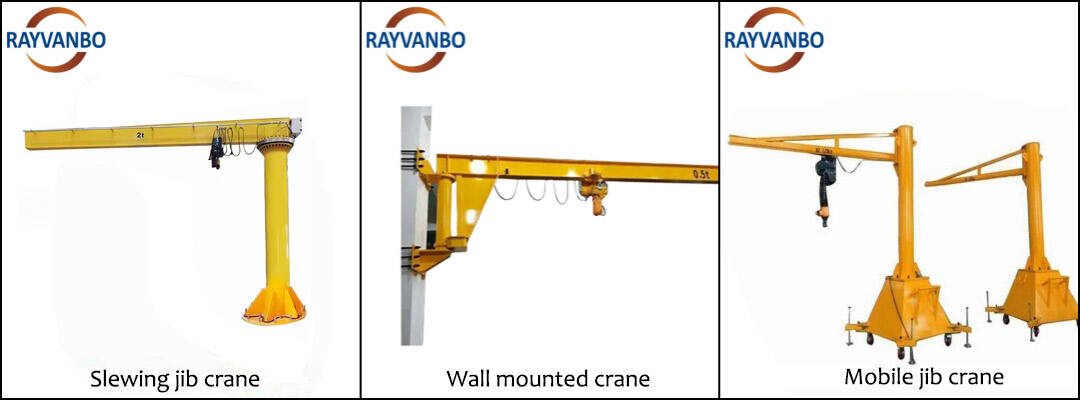
When choosing a jib crane, there are basically three things to consider all at once: what kind of money we'll save in the long run, how much space we actually have available, and what specific tasks need to get done day after day. The freestanding models can rotate completely around which is great for big manufacturing setups where parts need to be moved from every angle. But here's the catch they need really strong bases built into the floor, and that typically adds about 15 to 20 percent to the upfront price tag compared to those mounted on walls. Articulating arms are another option worth looking at, especially when working in tight spaces such as mold shops. These cranes focus more on getting around obstacles than lifting super heavy loads. And then there are portable versions that move between different locations easily enough, though nobody wants to try lifting something while the whole thing wobbles at maximum extension. Stability becomes a real issue when reaching out too far.
| Crane Type | Ideal Space Scenario | Max ROI Application | Key Trade-off |
|---|---|---|---|
| Freestanding | High-bay manufacturing | Automotive assembly | 20% higher installation costs |
| Wall-mounted | Narrow maintenance aisles | Power equipment retrofits | Limited 180° rotation |
| Articulating | Obstacle-dense tooling cells | Precision component placement | 30% lower load capacity |
| Mast-type | Workshops needing dual support | Ship engine repairs | Complex structural integration |
| Portable | Multi-site repair operations | Temporary production lines | Reduced stability at full reach |
For manufacturing operations that need equipment running nonstop day after day, investing in those high-end motorized jib systems makes sense despite the cost. Repair shops tend to go for portable models instead since they can move them around easily when needed. When it comes to proving if these investments pay off, companies should look at how much floor space each dollar spent actually covers and track reductions in workplace injuries. The Ponemon Institute released findings last year showing workplaces using proper ergonomic lifting gear saw almost 60% fewer strain injuries among workers. At the end of the day, picking between different systems isn't just about comparing spec sheets. What really matters is whether the chosen solution works smoothly within daily workflows, fits the physical limitations of the workshop or factory, and supports the bigger picture goals for production over several years rather than just short term fixes.
FAQ Section
What are the main types of jib cranes?
The main types of jib cranes include freestanding, wall-mounted, articulating, mast-type, and portable models. Each has distinct features suited to various industrial needs.
Where are freestanding jib cranes typically used?
Freestanding jib cranes are commonly used in foundries and open warehouse bays, offering a 360-degree rotation and handling heavy loads up to 20 tons.
Why choose a wall-mounted jib crane?
Wall-mounted jib cranes are ideal for saving floor space in assembly lines and tight workshops, suitable for lighter loads up to 5 tons, and offer 180 to 200 degrees of rotation.
How do articulating jib cranes benefit maintenance operations?
Articulating jib cranes are excellent for maneuvering past obstacles in maintenance areas and can be used in confined spaces, supporting loads up to 2 tons.
What should be considered when selecting a jib crane?
When selecting a jib crane, consider cost-effectiveness, available space, and specific operational tasks. Balance the need for efficiency, safety, and the required load capacity.
Table of Contents
- Jib Crane Fundamentals: Design Types and Core Industrial Capabilities
- Jib Cranes in Maintenance Operations: Safety, Access, and Retrofit Efficiency
- Jib Cranes in Assembly Processes: Precision Positioning and Line Integration
- Selecting the Right Jib Crane: ROI, Space Constraints, and Sector-Specific Trade-offs
- FAQ Section