 EN
EN


Determine Overhead Crane Load Capacity and CMAA Duty Class for Long-Term Reliability
Getting the right size for an overhead crane starts with figuring out what actual load capacities are needed. Most engineers recommend adding around 25 to 30 percent extra capacity on top of whatever the maximum static weight might be, just in case something goes wrong or gets heavier than expected. The dynamic aspects matter too. When cranes accelerate, slow down, or deal with swinging loads, these movements can actually put between 15 and 40 percent more stress on the system than what static weights alone would suggest. Take a 10 ton load as an example. With that standard 25% buffer making it 12.5 tons, then factor in those dynamic stresses using a multiplier of about 1.25, suddenly we're looking at needing a crane rated for roughly 15.6 tons instead. Doing these kinds of math prevents metal fatigue issues over time and keeps everything compliant with OSHA regulations during the whole life cycle of the equipment.
CMAA Classes C, D, and E Explained: Matching Duty Cycle to Production Intensity
The Crane Manufacturers Association of America (CMAA) class system defines operational intensity through standardized duty cycles:
| Class | Lifts/Hour | Avg Load % | Typical Applications |
|---|---|---|---|
| C (Moderate) | 5–10 | 50% | Machine shops, assembly lines |
| D (Heavy) | 10–20 | 65–100% | Foundries, freight terminals |
| E (Severe) | 20+ | 75–100% | Steel mills, scrap processing |
Class C is good for those operations that happen now and then with average weight stuff. Class D handles when things get busy with heavy lifting most of the time. And Class E? These are built for serious work all day long under tough conditions. When companies pick a lower class than what they really need, parts start wearing out much quicker. Some industry research shows components can degrade three times faster this way. That makes it pretty clear why matching the right duty class matters so much for keeping equipment running reliably and getting better returns on investment over time.
Select the Optimal Overhead Crane Type Based on Facility Layout and Workflow
Bridge, Gantry, Jib, and Monorail Cranes: Use Cases Defined by Travel Distance, Lift Height, and Space Constraints
Four primary overhead crane types address distinct spatial and operational needs:
- Bridge cranes maximize horizontal coverage in rectangular facilities with long travel paths, ideal for assembly lines spanning 30+ meters.
- Gantry systems operate floor-supported, eliminating ceiling constraints for outdoor storage yards or buildings lacking overhead runway beams.
- Jib cranes provide 180°–360° rotation in compact corners, servicing work cells under 5-ton loads with minimal floor footprint.
- Monorails transport materials along fixed I-beam paths, optimizing linear processes like paint shops where vertical space is restricted.
Top-Running vs Under-Running Bridge Cranes: Structural Compatibility and Retrofit Feasibility
Top-running and under-running (underslung) configurations present critical structural trade-offs:
| Feature | Top-Running Crane | Under-Running Crane |
|---|---|---|
| Runway Support | Requires reinforced columns | Mounts to existing roof trusses |
| Headroom Usage | Higher vertical clearance needed | Saves 15–20% headroom |
| Ideal For | New facilities (10-ton lifts) | Retrofits/ceiling height limits |
| Max Span | Up to 35 meters | Typically under 25 meters |
Top-running systems handle heavier loads (25+ tons) but demand robust building frameworks. Under-running variants adapt to low-clearance facilities by suspending from ceiling structures, reducing installation costs by ~30% for light-to-medium duty applications.
Evaluate Girder Configuration and Control Systems for Efficiency and Integration
Selecting the optimal girder design and control interface directly impacts your overhead crane’s operational efficiency, safety, and long-term integration capabilities within industrial workflows.
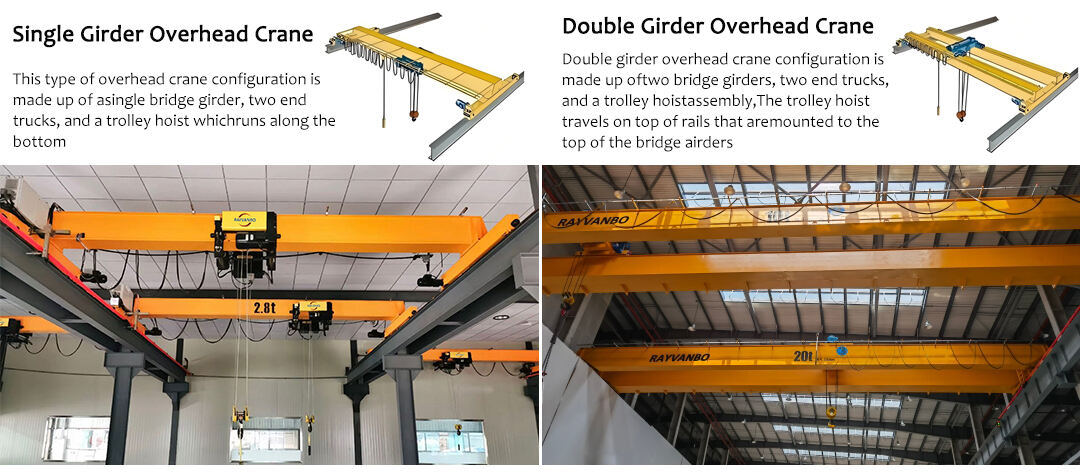
Single vs Double Girder Overhead Crane: Rigidity, Span Limits, and Hook Height Trade-offs
When deciding between single and double girder setups, there are several factors to consider. Single girder models tend to save money and give better clearance under low ceilings, making them great for handling lighter weights below 20 tons across distances less than 30 meters. Double girder systems on the other hand are much stiffer and handle bending better, which matters a lot for exact work or when covering longer spans beyond 30 meters. According to industry data, these double systems stay within L/1000 deflection even when fully loaded, so they don't sway as much during delicate positioning tasks. The downside? Extra support structures cut down on hook height by around 18 to 24 inches. But manufacturers have come up with clever ways to offset this issue through stronger steel alloys and smarter placement of reinforcing elements throughout the frame, creating a good balance between lasting strength and efficient use of materials.
Modern Control Options for Overhead Crane: Radio Remote, Pendent, and PLC-Integrated Systems
Modern control systems really boost both operational flexibility and workplace safety across industrial settings. The old school pendant stations still work well enough for basic lifting tasks in tight spaces, though they definitely restrict where operators can move around. Switching to radio remote controls makes things much better from an ergonomic standpoint while giving workers clearer views of what's happening. Logistics safety reports actually show these remotes cut down blind spots by about 40%, which matters a lot in busy environments. When dealing with complicated material handling operations or fully integrated production lines, PLC systems come into play. These programmable logic controllers handle everything from sequencing movements to preventing collisions and running diagnostics in real time. What's interesting is how these systems connect directly with warehouse management software, providing valuable insights into cycle times and when maintenance might be needed next. And with advanced IO-Link communication technology, facilities can monitor motor temperatures and track brake wear patterns. This kind of predictive maintenance approach helps reduce unexpected equipment failures by roughly 30%, something that saves money and keeps operations running smoothly.
Factor in Total Cost of Ownership Beyond Initial Purchase Price
When selecting an overhead crane, the initial purchase price represents just 20–30% of the total investment. A comprehensive Total Cost of Ownership (TCO) analysis accounts for all direct and indirect expenses throughout the equipment’s lifecycle. Key components include:
- Installation/Integration: Structural modifications, electrical work, and commissioning labor
- Operational Costs: Energy consumption (variable by motor efficiency), operator wages, and consumables
- Maintenance: Scheduled inspections, part replacements, lubrication, and repair labor
- Downtime Impacts: Production losses from unexpected failures ($15k/hour average in manufacturing)
- Residual Value: Estimated resale price minus decommissioning/disposal costs
Energy-efficient models can reduce operational expenses by 15–25% annually, while robust designs lower long-term maintenance frequency. Factoring in these elements ensures your crane solution delivers optimal ROI over its 20–30 year service life.
FAQ
How do I determine the right CMAA class for my needs?
The right class depends on operational intensity and typical load; C suits moderate, D is for heavy, and E for severe duty cycles.
What are the types of overhead cranes available?
Bridge, gantry, jib, and monorail cranes offer different advantages based on facility layout and workflow.
What is the benefit of using modern control systems in cranes?
Modern systems enhance operational flexibility and safety, with options like radio remote controls and PLC systems.
Why is Total Cost of Ownership important?
Considering TCO helps evaluate all costs, ensuring the crane delivers optimal ROI over its service life.
What load capacity should I consider for my overhead crane?
It's recommended to add 25 to 30 percent extra capacity to the maximum static weight for safety, considering dynamic stresses.
Table of Contents
- Determine Overhead Crane Load Capacity and CMAA Duty Class for Long-Term Reliability
- Select the Optimal Overhead Crane Type Based on Facility Layout and Workflow
- Evaluate Girder Configuration and Control Systems for Efficiency and Integration
- Factor in Total Cost of Ownership Beyond Initial Purchase Price
- FAQ