 EN
EN


Manufacturing and Assembly: Precision Lifting in Automated Production About Electric Chain Hoists
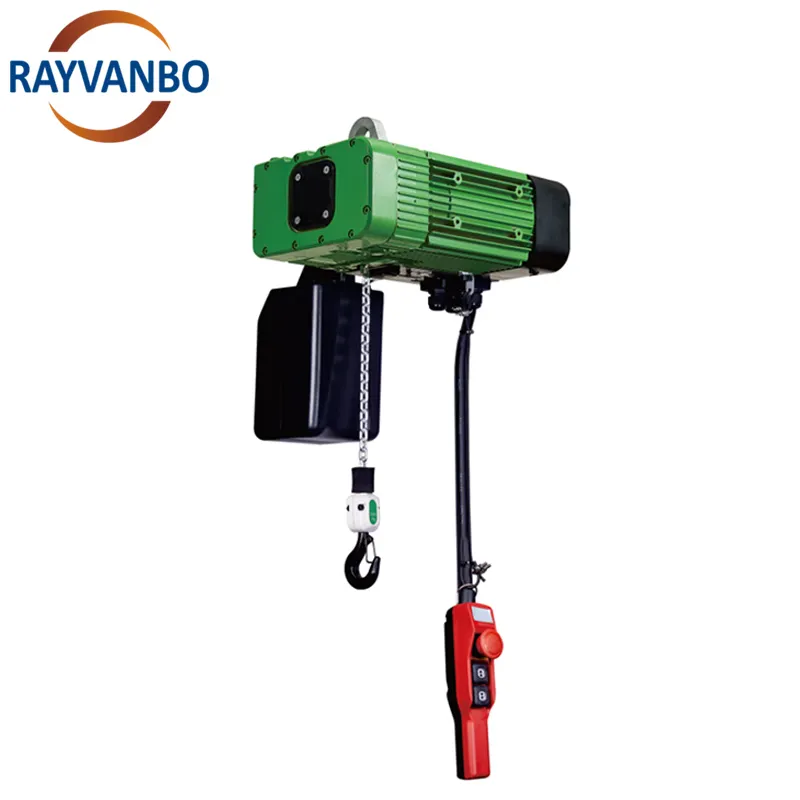
Electric chain hoists are essential in modern manufacturing, offering the precision and reliability needed for automated production. Capable of lifting loads up to 20 tons with millimeter-level accuracy, they support repetitive assembly tasks that demand strict quality control.
The Role of Electric Chain Hoists in Industrial Automation
By eliminating manual lifting errors and maintaining consistent cycle times, these systems enhance efficiency in just-in-time manufacturing. Advanced models include overload protection and emergency braking, ensuring compliance with ISO 13849 safety standards.
Case Study: Improving Efficiency in Automotive Assembly Lines
A major automotive plant increased productivity by 19% after replacing manual hoists with electric chain hoists on its automated chassis assembly line. Programmable lifting paths reduced component misalignment by 42%, as documented in industry automation research focused on high-volume production optimization.
Integration with Robotics and PLC-Controlled Systems
Equipped with CANopen interfaces, modern electric chain hoists enable real-time communication with robotic arms and programmable logic controllers (PLCs). This allows synchronized lifting operations across multi-stage processes, achieving position repeatability within ±1 mm.
Optimizing Workflow with Overhead Lifting Solutions
Gantry-mounted electric hoists free up 28% more floor space than floor-based material handling systems (Material Handling Institute 2023). Facilities using overhead solutions report 15% faster changeover times due to improved vertical material flow.
Trend: IIoT-Enabled Monitoring for Predictive Maintenance
Leading manufacturers now deploy hoists with embedded IoT sensors that monitor chain elongation and motor temperature. These inputs feed predictive maintenance algorithms, reducing unplanned downtime by 37% in automotive stamping plants (Industry 4.0 Report 2024).
Construction and Modular Building: Safe Vertical Transport of Heavy Loads
Electric chain hoists tackle some real problems facing construction these days, especially when it comes to lifting heavy stuff straight up in crowded city areas while keeping workers safe. On those tall building sites, these machines can manage massive prefabricated steel beams and concrete panels that weigh around 20 tons each. This makes things go much faster than relying on old school cranes which take forever to set up. Looking at what happened in Shanghai last year with their modular skyscrapers gives us some interesting numbers. Researchers there noticed that when builders used portable electric hoists instead of other methods, they made about 32% fewer mistakes during material handling. The reason? These devices position loads so precisely even in really tight spots where regular equipment just doesn't work well.
The off site modular construction industry is on the rise, expected to grow about 15 percent each year until 2030 according to the Global Construction Report from 2024. Equipment needs to work well in both factory settings and actual construction sites. Today's hoists come equipped with smart load sensing tech plus those reliable fail safe brakes that really boost safety while installing modules. Being able to handle both environments makes all the difference, particularly when dealing with complete modules already put together. Getting the weight balanced properly matters a lot because otherwise there can be serious stress on structures when placing them in their final spots.
Warehousing and Logistics: Enhancing Inventory Movement with Automation
Electric Chain Hoists in E-Commerce-Driven Warehouse Expansion
With e-commerce driving a projected $100B intralogistics automation market by 2034 (Exactitude Consultancy 2024), electric chain hoists have become vital in fulfillment centers. They enable rapid vertical stacking in high-bay warehouses, maximizing cubic storage capacity while ensuring precise load control during continuous operations.
Efficient Pallet and Crate Handling in Distribution Centers
Featuring variable-speed control and automated height positioning, electric chain hoists achieve 40% faster pallet transfers than manual methods. A single unit can manage up to 3 tons, streamlining cross-docking in hubs processing over 50,000 daily SKUs.
Integration with Conveyor Systems and AS/RS Technology
When synchronized with automated storage/retrieval systems (AS/RS), electric chain hoists contribute to seamless material flow:
| System Component | Function | Efficiency Gain |
|---|---|---|
| Conveyor Belts | Horizontal transport | 30% faster throughput |
| AS/RS Cranes | Vertical storage | 95% inventory accuracy |
| Chain Hoists | Load transfer | 50% labor reduction |
Reducing Manual Labor Through Semi-Automated Lifting
Top distribution centers report 60% fewer workplace injuries after adopting semi-automated lifting systems with smart load sensors. Remote pendant controls and programmable lift paths allow one operator to manage multiple hoists simultaneously, increasing productivity by 2.8× in IoT-enabled warehouse environments.
Energy and Heavy Machinery: Reliable Lifting in Demanding Environments
Maintaining Power Generation Equipment with Controlled Lifting
Electric chain hoists provide precise handling of turbines, boilers, and generators during power plant maintenance. A 2023 study showed controlled lifting reduces equipment alignment errors by 32% in coal and nuclear facilities, directly improving operational uptime. These hoists support loads up to 20 tons with millimeter-level accuracy for sensitive installations.
Case Study: Wind Turbine Installation Using Electric Chain Hoists
An offshore wind project in the North Sea used explosion-proof electric chain hoists to lift 15-ton nacelles in harsh marine conditions. IP66-rated components and variable-speed controls cut assembly time by 40% compared to conventional rigging, demonstrating resilience in extreme weather.
Handling Large CNC and Fabrication Machines in Industrial Plants
Manufacturers use electric chain hoists with reinforced load chains to install multi-axis CNC machines exceeding 12 tons. Dual braking systems and overload protection prevent slippage during vertical transfers, addressing key safety risks in machinery setup.
Smart Load Sensing and Remote Monitoring Technologies
Modern hoists incorporate IoT sensors that track critical parameters:
| Parameter | Impact | Industry Standard |
|---|---|---|
| Real-time load | Prevents overloading | ISO 12480-1:2022 |
| Motor temperature | Reduces failure risk by 65% | IEC 62061 |
| Usage cycles | Optimizes preventive maintenance | ANSI/ASME B30.16-2020 |
Sensor data flows to centralized dashboards, enabling operators to anticipate wear patterns 8–12 weeks in advance.
Ensuring Compliance with Safety Standards in Hazardous Areas
Hoists designed for ATEX Zone 1/21 compliance feature intrinsically safe electronics and spark-resistant materials. In oil refineries and chemical plants, fail-safe brakes and emergency stops meet OSHA 1910.179(g) requirements, contributing to 99.8% incident-free operation in 2023 audits. Third-party certification bodies validate performance through annual stress tests under 110% rated load conditions.
Comparative Advantages and Future Trends of Electric Chain Hoists
Electric vs. Manual Hoists: Productivity Gains and ROI Analysis
Electric chain hoists can speed up lifting cycles by around 40% according to Ponemon's research from 2023, which means projects get done quicker and saves money on labor expenses. Traditional manual lifting setups usually need two or three people working together when handling heavy loads, but electric models let just one person operate everything with much better accuracy. Most companies find they start seeing returns on their investment somewhere between 18 to maybe 24 months later because there are fewer workplace injuries and less time lost when equipment breaks down. This makes a big difference particularly in places like auto manufacturing plants where even small delays during production hours can set businesses back roughly eight thousand dollars each hour.
Data Insight: 40% Faster Lifting Operations with Electric Systems
Unlike manual hoists, electric systems maintain consistent speed regardless of load, avoiding fatigue-related slowdowns. For example, relocating a 5-ton CNC machine takes 12 minutes with an electric hoist versus 20 minutes manually—a crucial advantage in energy maintenance, where plant downtime exceeds $7,500/hour.
Sustainability and Energy Efficiency in Modern Hoisting Equipment
Regenerative braking and energy-efficient motor designs reduce power consumption by 30%, supporting net-zero manufacturing goals. According to the 2023 Materials Handling Institute report, companies switching to electric hoists cut carbon emissions by 18 tons annually—equivalent to removing four gasoline-powered vehicles from roads each year.
Future Outlook: Smart Factories and Industry 4.0 Integration
IIoT-enabled hoists detect potential failures 85% earlier using vibration analytics and usage tracking, cutting repair costs by 40%. Integration with PLCs allows full synchronization in automated environments; for instance, Guangdong’s Model 4.0 Warehouse reduced component retrieval time from 8 minutes to 110 seconds by linking hoists with robotic arms.
Applications Across Industries: From Manufacturing to Renewables
Beyond industrial settings, electric hoists install 12-ton wind turbine nacelles 50% faster in renewable energy projects and handle fragile solar panels without causing microfractures. Their 360° rotation capability benefits confined urban construction sites, where 73% of contractors report better adherence to OSHA safety regulations (OSHA 2023).
Comparison: Operational Parameters of Hoist Types
| Metric | Electric Chain Hoists | Manual Chain Hoists |
|---|---|---|
| Max Speed (m/min) | 10.2 | 3.5 |
| Avg ROI Period | 20 months | N/A |
| Operator Fatigue Rate | 12% | 67% |
| Noise Level (dB) | 72 | 84 |
Data source: 2024 Lifting Equipment Efficiency Report
FAQ
What are electric chain hoists used for in manufacturing?
Electric chain hoists are used in manufacturing to lift heavy loads with precision and support automated production processes. They help ensure quality and consistency in tasks that require stringent quality control.
How do electric chain hoists contribute to safety in construction?
In construction, electric chain hoists enhance safety by precisely handling heavy materials in confined spaces, reducing the chances of accidents or material misplacement.
What advantages do electric chain hoists provide in warehousing?
Electric chain hoists enhance warehousing operations by allowing for rapid vertical stacking and precise load control, thus maximizing storage capacity and streamlining inventory management.
How do electric chain hoists support renewable energy projects?
In renewable energy, electric chain hoists are used to install heavy components like wind turbine nacelles more efficiently and safely, contributing to faster project completion.
Table of Contents
- Manufacturing and Assembly: Precision Lifting in Automated Production About Electric Chain Hoists
- Construction and Modular Building: Safe Vertical Transport of Heavy Loads
- Warehousing and Logistics: Enhancing Inventory Movement with Automation
- Energy and Heavy Machinery: Reliable Lifting in Demanding Environments
- Maintaining Power Generation Equipment with Controlled Lifting
- Case Study: Wind Turbine Installation Using Electric Chain Hoists
- Handling Large CNC and Fabrication Machines in Industrial Plants
- Smart Load Sensing and Remote Monitoring Technologies
- Ensuring Compliance with Safety Standards in Hazardous Areas
-
Comparative Advantages and Future Trends of Electric Chain Hoists
- Electric vs. Manual Hoists: Productivity Gains and ROI Analysis
- Data Insight: 40% Faster Lifting Operations with Electric Systems
- Sustainability and Energy Efficiency in Modern Hoisting Equipment
- Future Outlook: Smart Factories and Industry 4.0 Integration
- Applications Across Industries: From Manufacturing to Renewables
- FAQ