 EN
EN



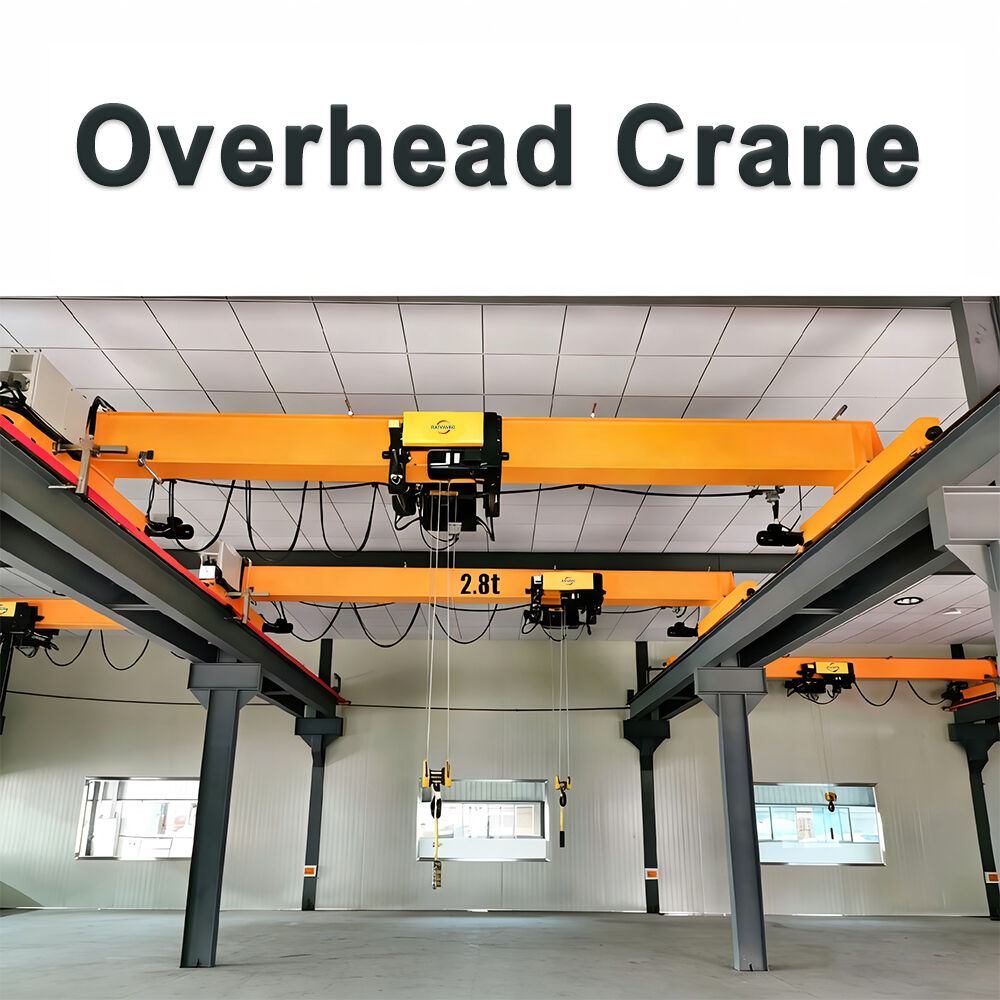
The Fundamental Relationship Between Span Length and Overhead Crane Stability
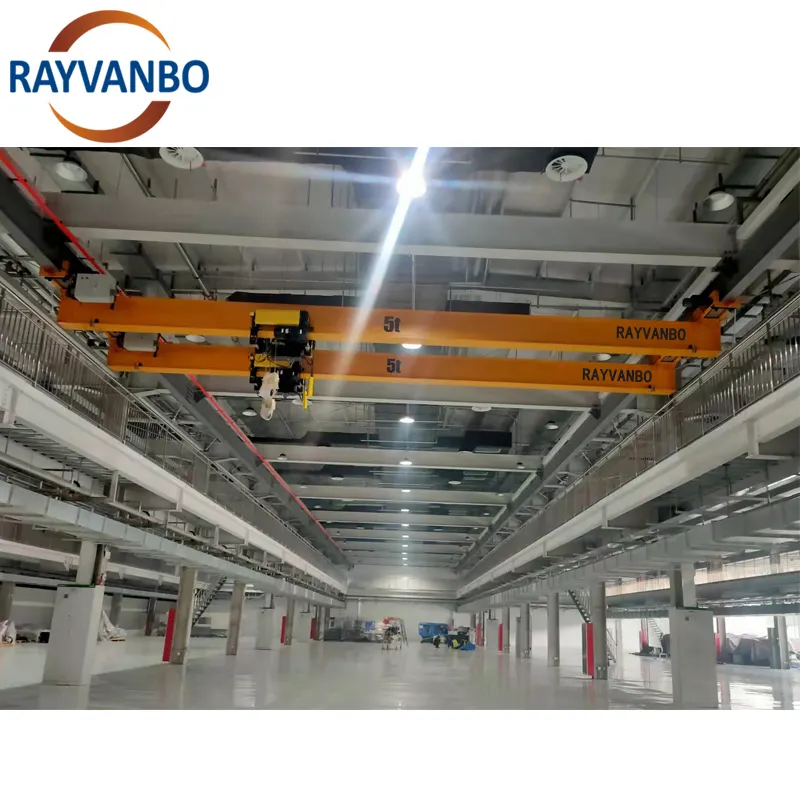
Static equilibrium, global stiffness, and lateral torsional buckling dependence on span
The length of the span plays a major role in determining three key aspects of stability when designing overhead cranes. Let's start with static equilibrium. When spans go past about 20 meters, keeping things balanced gets really tough fast. The math behind it shows bending moments shoot up according to this formula M equals wL squared over 8, with L being the span length. Just doubling the span means four times the stress on those girders. Moving on to stiffness, longer spans make structures less rigid overall. We typically see around a 15 to 25 percent drop in stiffness for every additional 10 meters added to the span, which means more risk of unwanted movement when loads are applied. Finally there's the issue of torsion. With I-beam girders, once we hit around 30 meter spans, something dangerous happens. The beams become much more prone to twisting because their torsional rigidity drops below what's needed to stay stable. This can lead to compression flanges twisting out of control during operation, potentially causing serious structural failures if not properly addressed in design.
Standards alignment: ISO 8686-1 and CMAA 74 requirements for span-based stability classification
The international standards world has pretty strict rules about how crane designs need to change based on their span lengths. Take ISO 8686-1 for instance it sorts cranes into different classes from B1 all the way up to B5. These classifications start at spans under 15 meters and go up past 35 meters. As we move through these classes, the requirements get tougher too. Thicker flange plates become necessary and the maximum stress levels allowed drop off significantly. For example, when comparing Class B4 cranes covering 30 to 35 meters against Class B2 models, there's actually an 18% reduction in what they can handle in terms of working stress. Looking at another standard, the CMAA 74 spec section 4.5 gets specific about things like lateral bracing and stiffener spacing once spans hit over 25 meters. What all this boils down to is a simple rule of thumb in the industry: whenever the span increases by around 5 meters, engineers either need to switch to better quality steel materials like ASTM A992 rather than using regular A36 steel, or incorporate additional supports such as reinforced runway systems. Failure to follow these guidelines could lead to serious problems since most regulations set a deflection limit of L/600 according to ASME B30 standards when operating at full capacity.
Load Distribution and Girder Response Across Increasing Overhead Crane Spans
Quadratic escalation of bending moments and deflection beyond 20 m — engineering implications
When spans go beyond 20 meters, things get complicated fast. The bending moments start growing quadratically while deflections escalate in a cubic fashion. What does this mean practically? If we double the span length, vertical deflection goes up by about eight times. This kind of behavior really speeds up fatigue buildup in steel girders and makes it much harder to maintain accurate load positioning. And then there's the issue when trolleys operate off center, which creates even more problems with lateral torsion forces. To handle all this, engineers need to implement several structural reinforcements. Web stiffeners should be placed no more than 1.2 meters apart along the girder. Flange plates must be at least 40 mm thick to withstand the stresses. Most importantly, stress levels shouldn't exceed 140 MPa during repeated lifting operations, otherwise the whole system risks failure over time.
Comparative girder performance: AISC-ASD vs. Eurocode 3 under extended-span conditions
Field measurements confirm Eurocode 3–designed girders reduce deflection by 12–18% compared to equivalent AISC-ASD implementations under 25-ton loads, particularly above 30-meter spans.
Dynamic Stability Risks in Long-Span Overhead Crane Systems
Natural frequency decay, resonance thresholds, and operational mitigation above 32 m spans
The natural frequency of structures tends to drop off quite rapidly as spans get longer, often falling by around two thirds when going from 20 meters to 40 meters. What this means in practice is that there's a much smaller margin for safe operation. When the movements of hoists or trolleys happen to match the building's natural rhythm (usually somewhere between 1.5 and 2.5 hertz for cranes over 30 meters long), something called resonance kicks in. This causes those annoying sideways shakes to become much worse than normal. And these intensified vibrations can actually damage important parts like welds and steel girders over time. There are ways to deal with this problem though...
- Operational frequency zoning, enforcing speed limits to avoid harmonic overlap;
- Active damping systems, such as tuned mass dampers that suppress oscillations in real time;
- Structural health monitoring, using accelerometers to detect early frequency shifts during load cycling.
These strategies collectively reduce dynamic deflection by ~40% in field deployments. Additionally, bolted connections on cranes spanning 32 m require torque verification every 500 operational hours to sustain damping performance.
Design Trade-Offs and Practical Mitigation Strategies for Extended-Span Overhead Cranes
Extended spans introduce unavoidable trade-offs between structural performance, safety compliance, and economic feasibility. Beyond 30 meters, steel tonnage rises up to 40% for equivalent load capacities—driven by CMAA 74–mandated deflection limits and torsional instability controls. To manage vertical deflection (<20 mm/meter) and prevent lateral buckling, proven structural solutions include:
- Double-girder configurations with reinforced end trucks;
- Mid-span auxiliary support columns;
- Tapered box girders that improve strength-to-weight ratios.
Operationally, anti-sway systems cut lateral forces by 60% during hoisting, while strain-gauge monitoring enables predictive maintenance—identifying micro-deformations before they evolve into critical flaws.
FAQ Section
What is the impact of span length on overhead crane design?
Span length critically affects static equilibrium, stiffness, and torsional buckling. Longer spans lead to increased bending moments, reduced rigidity, and increased susceptibility to torsion, necessitating careful design modifications.
What standards govern crane design based on span length?
ISO 8686-1 and CMAA 74 provide guidelines based on span lengths. These standards dictate classifications, maximum stress levels, and design adjustments needed to ensure stability and compliance.
How do bending moments escalate with increasing spans?
Bending moments rise quadratically with increased span length, influencing deflections which escalate cubically, affecting girder performance and requiring specific structural reinforcements.
What are the comparative benefits of AISC-ASD and Eurocode 3?
Eurocode 3 allows for optimized weight through dynamic modeling, whereas AISC-ASD employs conservative safety factors, increasing material tonnage. Eurocode 3 reduces deflection, enhancing efficiency in extended spans.
What are the risks of dynamic stability in long-span cranes?
Dynamic stability issues include natural frequency decay leading to resonance. Operational frequency zoning, damping systems, and structural monitoring help mitigate these risks and reduce deflections.
Table of Contents
- The Fundamental Relationship Between Span Length and Overhead Crane Stability
- Load Distribution and Girder Response Across Increasing Overhead Crane Spans
- Dynamic Stability Risks in Long-Span Overhead Crane Systems
-
Design Trade-Offs and Practical Mitigation Strategies for Extended-Span Overhead Cranes
- FAQ Section
- What is the impact of span length on overhead crane design?
- What standards govern crane design based on span length?
- How do bending moments escalate with increasing spans?
- What are the comparative benefits of AISC-ASD and Eurocode 3?
- What are the risks of dynamic stability in long-span cranes?