 EN
EN


Évaluez les besoins opérationnels de votre atelier
Sélectionner optimal équipement de levage pour atelier les environnements nécessitent une évaluation méthodique des paramètres opérationnels fondamentaux. Cette évaluation initiale permet d’éviter les inadéquations coûteuses entre les capacités de l’équipement et les exigences réelles du flux de travail.
Déterminez la capacité de charge, le poids, la fréquence et le cycle de service
Commencez par quantifier les poids de charge maximale — y compris les objets de forme irrégulière — et documentez la fréquence des levées par poste. Les ateliers effectuant plus de 50 levées par heure nécessitent un équipement homologué pour des cycles de service continu (classe F4+), tandis que les opérations intermittentes (≤ 10 levées/jour) peuvent utiliser des classes plus légères. Les inadéquations de cycle de service sont à l’origine de 34 % des pannes prématurées de l’équipement (Lifting Standards Journal, 2024). Prévoyez systématiquement une marge de sécurité de 25 % au-dessus des charges maximales afin de tenir compte des efforts dynamiques. Les contraintes environnementales — telles que les températures extrêmes — accélèrent également la fatigue des matériaux dans les roulements et les mécanismes de palans ; tenez-en compte dans vos critères de sélection.
Analyser l'agencement spatial, les parcours de flux de travail et les contraintes de dégagement
Cartographiez les dimensions physiques de votre atelier en mettant l'accent sur le dégagement vertical, l'espacement des poteaux et les seuils des portes. Les goulots d'étranglement dans les flux de travail surviennent dans 68 % des installations dont les parcours ne sont pas optimisés (Rapport d'optimisation des installations, 2023). Utilisez une planification par zones :
| Paramètre | Considération essentielle | Exemple d'impact |
|---|---|---|
| Jeu horizontal | Largeur des allées par rapport au rayon de braquage des équipements | les allées de moins de 3 m nécessitent des chariots élévateurs compacts |
| Dégagement vertical | Obstructions aériennes (tuyauteries, éclairage) | Les ponts roulants à faible hauteur permettent de gagner 40 cm d'espace |
| Zones de flux de travail | Proximité entre les zones de réception, de préparation et de traitement | Les flux linéaires réduisent les déplacements de 30 % |
Simulez les trajectoires des équipements à l'aide d'outils CAO afin d'identifier les risques de collision. Veillez au respect des périmètres de sécurité obligatoires — tels qu'un dégagement minimal de 1 m autour des rayons opérationnels — et vérifiez que les points d'accès pour la maintenance correspondent aux exigences de service.
Comparer les types d'équipements de levage selon leur application en atelier
Ponts roulants et palans pour les opérations de levage à haut volume et sur trajet fixe
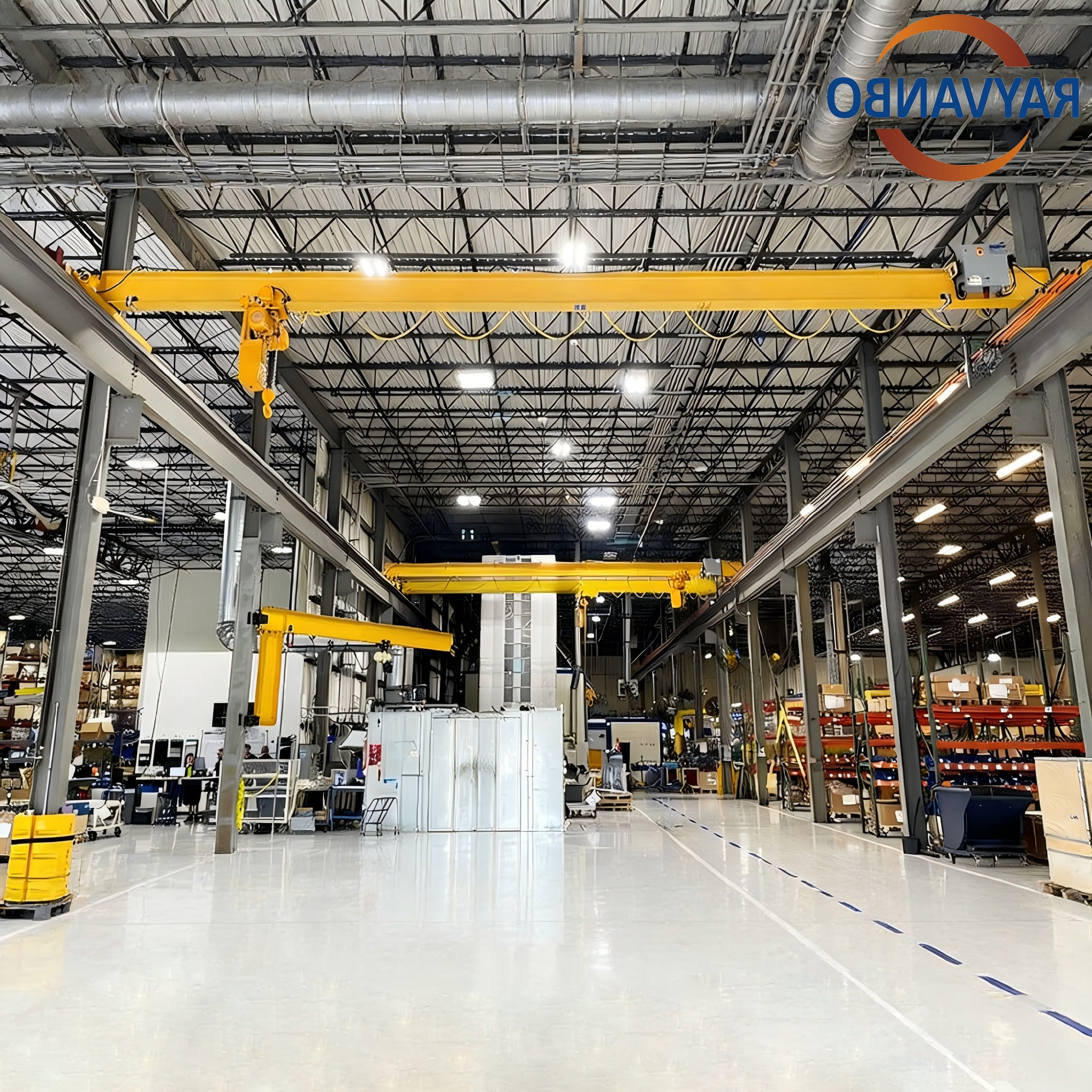
Pour les ateliers privilégiant des déplacements verticaux répétitifs et à forte capacité le long de parcours définis, les ponts roulants offrent une efficacité inégalée. Ces systèmes excellent dans les lignes d'assemblage ou les îlots d'usinage, où des charges de 2 tonnes ou plus nécessitent un positionnement précis le long de trajectoires fixes. Les portiques offrent une utilité similaire dans les environnements à plancher ouvert, soutenant des gains de productivité de 15–30%dans les environnements à fort débit en éliminant les obstacles au sol. Leurs chemins de levage fermés réduisent les risques de collision tout en optimisant l'utilisation de la hauteur sous plafond — un avantage clé dans les installations disposant d'une hauteur libre limitée. Des vérifications régulières de conformité à la norme EN 13155 garantissent l'intégrité des chaînes et la protection contre les surcharges lors d'opérations intensives.
Chariots élévateurs, transpalettes et vérins à ciseaux pour une manutention souple au niveau du sol
Lorsque les exigences opérationnelles impliquent un transport horizontal dynamique sur des itinéraires variables, les chariots élévateurs électriques et les transpalettes offrent une maniabilité essentielle. Les chariots élévateurs à contrepoids manipulent les marchandises palettisées dans des allées étroites (jusqu’à 2,3 mètres de large), tandis que les modèles équipés de pneus pneumatiques circulent sur des espaces de travail inégaux adjacents à l’extérieur. Pour les tâches de maintenance nécessitant une élévation stable à plusieurs postes, les plates-formes élévatrices à ciseaux fournissent des plateformes réglables en hauteur sans besoin de voies dédiées. Ensemble, ces solutions permettent de surmonter les contraintes d’espace dans les ateliers plus petits, notamment lorsqu’un repositionnement fréquent de matériaux pesant moins de 2 tonnes est requis. 73 % des opérations optimisent la productivité du flux de travail en adaptant la mobilité des équipements aux schémas de flux de travail (Enquête sectorielle 2024). Choisissez la motorisation électrique pour une utilisation plus propre en intérieur — ou des alternatives manuelles pour une efficacité économique sur des charges légères.
Assurez la conformité en matière de sécurité et la fiabilité à long terme
Le choix d'équipements de levage pour votre atelier exige de prioriser la sécurité et la durabilité grâce à des considérations rigoureuses en matière de conformité et de conception. Cela permet de réduire au minimum les accidents et d’allonger la durée de vie des équipements, garantissant ainsi un fonctionnement fluide.
Respectez les exigences LOLER, PUWER, EN 13155 et CE/UKCA
Conformez-vous aux réglementations essentielles telles que la LOLER (Règlementation relative aux opérations de levage et aux équipements de levage), qui impose des inspections régulières et des essais de charge ; la PUWER (Règlementation relative à la fourniture et à l’utilisation des équipements de travail), qui garantit l’utilisation sécurisée des machines ; et la norme EN 13155, qui régit la sécurité des accessoires de levage. Le marquage CE/UKCA atteste la conformité aux normes européennes et britanniques : les ateliers respectant ces exigences font état d’un taux d’accidents jusqu’à 40 % inférieur. Le non-respect de ces dispositions peut entraîner des amendes, des mises en demeure ou même l’arrêt des activités, rendant ainsi la documentation certifiée indispensable.
Évaluez l’accès à l’entretien, l’ergonomie de l’opérateur et les fonctions de sécurité intégrées
La fiabilité à long terme repose sur des points d’entretien facilement accessibles, ce qui réduit les temps d’arrêt et prolonge la durée de vie utile. Privilégiez l’ergonomie de l’opérateur, par exemple grâce à des commandes réglables et à des fonctionnalités anti-fatigue, afin de maintenir les performances et de réduire les erreurs humaines. Des éléments de sécurité intégrés — notamment la protection contre les surcharges, les circuits d’arrêt d’urgence et la technologie anti-balance — réduisent considérablement le risque de blessures. Les ateliers qui intègrent ces caractéristiques signalent une productivité accrue et des coûts de réparation inférieurs sur l’ensemble du cycle de vie.
Optimiser le coût total de possession et l’intégration énergétique
Manuel, électrique ou pneumatique : adapter la source d’énergie au flux de travail et à l’environnement
La source d'alimentation optimale influence directement le coût total de possession (CTP). Les systèmes manuels offrent un investissement initial faible, mais augmentent la charge physique sur les opérateurs lors de levages fréquents, ce qui les rend surtout adaptés aux tâches occasionnelles et à faible poids. Les modèles électriques assurent un fonctionnement énergétiquement efficace et silencieux, idéal pour une utilisation répétée en intérieur, bien qu’ils nécessitent une infrastructure électrique fiable. Les solutions pneumatiques sont indispensables dans les environnements explosifs ou dangereux, mais entraînent des coûts récurrents liés à la génération d’air comprimé. Privilégiez l’analyse du cycle de vie : dans les ateliers à forte utilisation, l’investissement initial requis pour les systèmes électriques est souvent justifié par la réduction des coûts d’exploitation — avec des économies moyennes de 18 000 $ sur cinq ans , selon l’Institut du manutentionnement (2023). Associez le type d’alimentation à l’intensité du flux de travail, aux contraintes environnementales et à la facilité d’accès pour la maintenance afin de minimiser le CTP.
FAQ
Quelle est la signification des cycles de service dans les équipements de levage ?
Les cycles de service sont cruciaux car ils déterminent la capacité de l’équipement à supporter les opérations. Le choix d’un équipement doté d’un cycle de service adapté garantit son bon fonctionnement et prévient les pannes prématurées.
Comment l’optimisation des flux de travail influence-t-elle la sélection des équipements de levage ?
L’optimisation des flux de travail permet d’identifier les contraintes liées à l’aménagement physique et aux itinéraires, ce qui oriente le choix d’un équipement répondant aux exigences opérationnelles sans créer de goulots d’étranglement.
Pourquoi les normes de sécurité telles que LOLER et PUWER sont-elles importantes ?
Le respect des normes de sécurité garantit un fonctionnement sûr et réduit les risques, minimisant ainsi les accidents et améliorant la fiabilité à long terme de l’équipement.
Quels facteurs doivent être pris en compte lors de la sélection d’une source d’alimentation pour les équipements de levage ?
Cette décision dépend de l’intensité opérationnelle spécifique de l’atelier, des conditions environnementales et des infrastructures de maintenance, ce qui influe sur le coût total de possession.
Table des matières
- Évaluez les besoins opérationnels de votre atelier
- Comparer les types d'équipements de levage selon leur application en atelier
- Assurez la conformité en matière de sécurité et la fiabilité à long terme
- Optimiser le coût total de possession et l’intégration énergétique
-
FAQ
- Quelle est la signification des cycles de service dans les équipements de levage ?
- Comment l’optimisation des flux de travail influence-t-elle la sélection des équipements de levage ?
- Pourquoi les normes de sécurité telles que LOLER et PUWER sont-elles importantes ?
- Quels facteurs doivent être pris en compte lors de la sélection d’une source d’alimentation pour les équipements de levage ?