 EN
EN


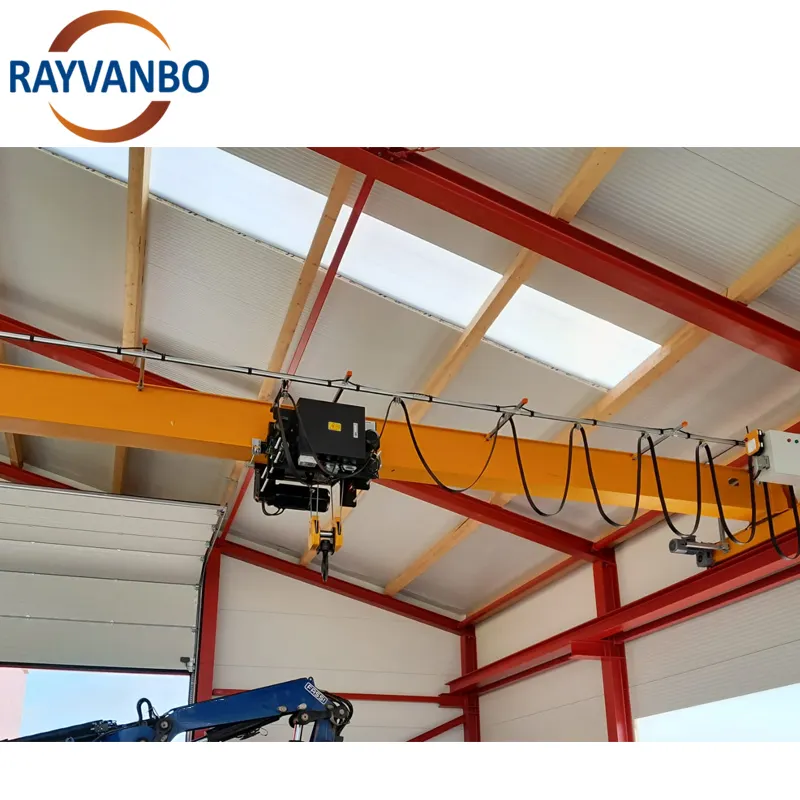
Heavy-Process Industries: High-Load, High-Temperature Crane Applications
Steel Production: Lifting Coils, Slabs, and Molten Metal Ladles
Overhead cranes in steel mills operate under extreme thermal and mechanical stress—lifting coils exceeding 40 tons and slabs above 500°C. Foundry cranes handle molten metal ladles, requiring heat-resistant materials, precision motion control, and fail-safe redundancy. These applications demand CMAA Class F duty cycles—the highest rating for continuous, high-temperature service. Critical design features include reinforced structural framing to resist thermal distortion, dual braking systems (primary and secondary) for ladle containment, and automated positioning to reduce operator exposure in hazardous zones.
Mining & Metallurgy: Bulk Ore Handling, Furnace Charging, and Refinery Maintenance
In mining and metallurgical facilities, overhead cranes manage high-volume, high-mass material flows—using grab attachments to lift 50+ ton ore batches between crushing, screening, and smelting stages. Furnace charging cranes deliver raw feedstock into extreme-heat zones, while refinery maintenance cranes support precise handling of catalyst beds, heat exchangers, and reactor internals. Industry best practices require IP65-rated enclosures for dust and moisture resistance, explosion-proof configurations where flammable gases or dust may accumulate, and operational readiness for 20+ lifts per hour. Ruggedized designs sustain 90% duty cycles in corrosive atmospheres, with fatigue-rated components validated to exceed 500,000 load cycles.
Manufacturing & Assembly: Precision, Repetition, and Integration with Automation
Automotive Plants: Body-in-White Transfer and Powertrain Line Integration
Automotive production relies on overhead cranes for repeatable, sub-millimeter accuracy across high-cycle assembly lines. In Body-in-White (BIW) transfer, cranes position vehicle frames between robotic welding stations within ±2mm tolerance—ensuring consistent panel gaps and eliminating costly rework. For powertrain integration, cranes lift engine and transmission assemblies up to 1.5 tons, synchronizing seamlessly with automated guided vehicles (AGVs) during chassis mating. Programmable logic controllers (PLCs) enable deterministic movement patterns across 200+ daily cycles, cutting manual intervention by 45% (Automotive Efficiency Report 2023). Anti-sway algorithms maintain stability when handling sensitive EV battery packs, preserving cell integrity during transit.
Aerospace Facilities: Controlled Lifting of Wing Assemblies and Fuselage Sections
Aerospace manufacturing imposes uncompromising demands on dimensional fidelity: composite wing or fuselage sections must be positioned with angular control under 0.5° and positional accuracy within 1mm to meet airworthiness requirements. Overhead cranes deploy micro-movement drives and vacuum lifters engineered to distribute 8-ton loads evenly across complex curvature points. During fuselage joining, laser alignment systems integrated into the crane verify and maintain trajectory in real time over the full 15-minute hoist cycle. These systems interface directly with digital twin models to simulate lift paths and collision risks before physical execution. Cleanroom-compatible environmental controls minimize particulate disturbance during composite skin placement, while redundant braking and real-time load monitoring safeguard multi-million-dollar components (Aerospace Safety Council 2023).
Logistics, Ports, and Infrastructure: Scalability and Outdoor-Rated Overhead Crane Uses
Marine Terminals and Shipyards: Container Stacking, Block Erection, and Dry-Dock Support
Outdoor-rated overhead cranes deliver unmatched scalability and reliability at marine terminals and shipyards. At container ports, they lift and stack ISO shipping containers directly from vessels to storage yards—accelerating cargo throughput and reducing vessel turnaround time. In shipbuilding, heavy-duty gantry cranes erect prefabricated hull blocks weighing over 100 tons, maintaining alignment tolerances critical to structural integrity. Dry-dock support cranes facilitate vessel maintenance under tidal constraints, operating reliably in salt-laden, high-humidity environments. Bulk cargo terminals use specialized grab cranes to unload coal or iron ore, cutting manual labor by 40% (Material Handling Institute 2023). Automation integration—including synchronized travel, lift, and trolley coordination—mitigates collision risk in dense, dynamic workspaces.
Energy & Renewables: Specialized Overhead Crane Applications for Critical Infrastructure
Nuclear, Hydro, and Wind Facilities: Turbine Component Installation and Maintenance
Overhead cranes in energy infrastructure must balance extreme specialization with regulatory rigor. In nuclear plants, radiation-hardened cranes incorporate seismic bracing and dual-redundant hoists compliant with ASME NQA-1—ensuring no single-point failure compromises reactor safety. Hydroelectric facilities deploy corrosion-resistant cranes to install and service turbine rotors up to 200 tons in high-humidity, chemically aggressive environments; precision laser alignment maintains ±0.5mm assembly tolerances. Offshore and onshore wind projects rely on mobile gantry cranes engineered for remote deployment and sustained operation in winds up to 15 m/s—lifting nacelles and blades exceeding 80 meters in length. Hub weights surpass 200 tons in offshore installations (IEA Wind Annual Report 2023), demanding dynamic load monitoring and active sway compensation. Across all sectors, fail-safe braking, backup power via automatic transfer switches, and hardened control systems ensure continuity where unplanned downtime costs average $740,000 per hour (Ponemon Institute 2023).
FAQ
What are the top applications for overhead cranes in heavy industries?
Overhead cranes are utilized in steel production, mining and metallurgy, manufacturing, assembly, logistics, marine terminals, nuclear, hydro, and wind facilities for high-load and high-temperature applications.
Why are CMAA Class F duty cycles essential for certain crane applications?
Class F duty cycles are crucial as they represent the highest duty rating for continuous and high-temperature service, ensuring cranes can handle the extreme conditions of heavy-process industries.
How do mining facilities benefit from specialized crane designs?
Specialized crane designs in mining facilities handle high-volume, heavy materials and include features like explosion-proof configurations and rugged designs for longevity and operational efficiency.
What technological advancements are integrated into manufacturing cranes?
Manufacturing cranes feature advanced technologies such as programmable logic controllers (PLCs), anti-sway algorithms, and seamless integration with automated systems for precision and efficiency.
How do cranes enhance safety and efficiency in shipyards?
Cranes in shipyards enhance safety and efficiency by offering automation integration, maintaining alignment tolerances, and providing reliable operation in harsh environments.
Table of Contents
- Heavy-Process Industries: High-Load, High-Temperature Crane Applications
- Manufacturing & Assembly: Precision, Repetition, and Integration with Automation
- Logistics, Ports, and Infrastructure: Scalability and Outdoor-Rated Overhead Crane Uses
- Energy & Renewables: Specialized Overhead Crane Applications for Critical Infrastructure
-
FAQ
- What are the top applications for overhead cranes in heavy industries?
- Why are CMAA Class F duty cycles essential for certain crane applications?
- How do mining facilities benefit from specialized crane designs?
- What technological advancements are integrated into manufacturing cranes?
- How do cranes enhance safety and efficiency in shipyards?