 EN
EN


Essential Features of a Portable Gantry Crane
Height-Adjustable and Modular Frame Design for Dynamic Load Handling
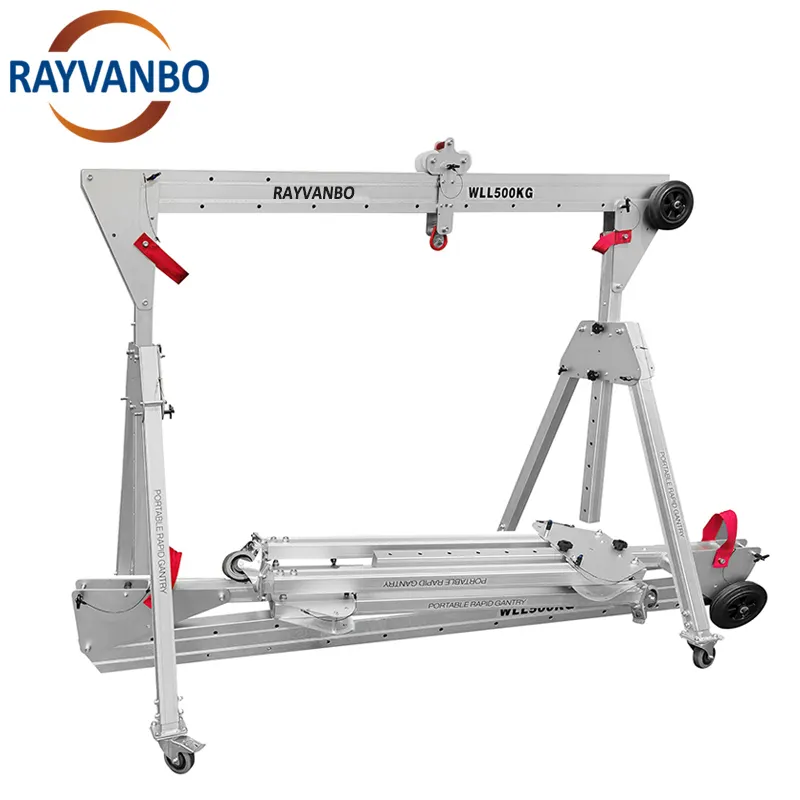
Portable gantry cranes really shine when conditions get messy on site because they come with adjustable frames ranging from 1.5 meters up to 6 meters tall, plus modular spans between 2 and 6 meters wide. The whole point of this setup is that these cranes can be adapted fast to deal with all sorts of situations - whether it's rough ground outside, cramped spaces inside buildings, or sites where things keep shifting around. No need for permanent anchors or big structural changes either. What makes them stand out compared to those fixed cranes? Well, the parts just snap together pretty quick with regular hand tools, which saves construction teams loads of time when they move locations every day. A major crane maker actually did some field testing and found their adjustable models saved workers about 70% of the time normally spent moving equipment around compared to older non-adjustable versions. That kind of efficiency matters a lot on tight schedules.
Lightweight-Durable Material Options: Aluminum vs. Structural Steel Trade-offs
Material choice balances portability, capacity, and environment:
- Aluminum alloy frames weigh 40–60% less than steel, enabling single-operator mobility and corrosion resistance without coating—ideal for outdoor or humid MRO applications up to 5 tons.
- Structural steel delivers higher rigidity and load capacity (up to 20 tons), but requires disassembly for transport and periodic protective painting.
| Material | Max Capacity | Weight per Meter | Corrosion Resistance |
|---|---|---|---|
| Aluminum Alloy | 5 tons | 8–12 kg | High (no coating) |
| Structural Steel | 20 tons | 22–30 kg | Medium (needs paint) |
For high-frequency relocation—especially in maintenance, repair, and operations—aluminum’s weight advantage typically outweighs steel’s strength ceiling.
Built-In Safety Systems: Brake-Locking Casters, Visual Load Limits, and Fail-Safe Structural Integrity
Safety just has to be there, no exceptions. When working with cranes, dual brake locking casters stop movement completely during lifting operations. Color coded load limits on the equipment help workers know what they can handle at a glance yellow stickers mean 1 to 2 tons capacity, red ones indicate 3 to 5 tons. This simple visual cue cuts down mistakes when things matter most. What really matters though is how these systems are built from day one. Redundant load paths mean the whole setup stays strong even if something breaks. Think about moving delicate stuff like glass panels for buildings this kind of backup protection saves thousands every year. The numbers back it up too industrial stats show these safety features stop around 9 out of 10 accidents during material handling. Facilities save roughly seven hundred forty thousand dollars annually in downtime costs because of them according to research published by Ponemon Institute last year.
Top 3 High-Value Use Cases for Portable Gantry Cranes
On-Site Construction & Prefab Installation: Slab, Glass, and Facade Panel Handling
Portable gantry cranes make construction work much easier when it comes to moving those heavy precast slabs, big glass panels, and facade components around with pinpoint accuracy. No need for workers to handle these massive items manually anymore, which reduces safety risks and makes everything fit better in place. The best part? These cranes take up very little space and can move through tight spots that regular mobile cranes just can't reach. Think about narrow building corridors, staircases, or half-finished structures where traditional equipment gets stuck. Because they're so nimble, crews spend about 30% less time moving the crane around between jobs. That means prefabricated elements get installed faster, and projects stay on schedule instead of running into those expensive delays everyone hates.
Metal Fabrication & Manufacturing Workshops: Welding Positioning, Assembly Support, and QC Lifts
Fabrication shops rely on these cranes as essential workholding solutions. When welding big steel parts together, they hold everything steady so joints stay aligned properly and prevent warping issues. Plus, they lift components up to comfortable working levels where assembly crews can actually do their jobs without strain. Quality control folks appreciate them too since they can spin around heavy castings or welded pieces to check every angle without needing special jigs or those cumbersome overhead hoists. Shops see real benefits too: alignment problems drop off, there's less need for fixing mistakes later, and production speeds pick up noticeably. Best part? All this happens without taking up extra shop space or requiring major investments in new equipment.
Maintenance, Repair, and Operations (MRO): Equipment Servicing in Space-Constrained or Temporary Facilities
Maintenance and repair crews turn to portable gantry cranes when they face tight spots, limited time frames, or poor infrastructure conditions. These situations come up all the time, from pulling out motors stuck in narrow factory corridors to working on turbines tucked away in makeshift outdoor enclosures. Since these cranes don't need any kind of base or anchor points, getting them set up happens within hours rather than waiting weeks for installation. Plus, because they can be completely taken apart, companies can move them around their different sites as needed. One major supplier claims workers complete tasks 45 percent quicker in tight areas using these mobile options instead of traditional fixed cranes. This means better use of expensive equipment and far less hassle during operations.
FAQ Section
What is a portable gantry crane?
A portable gantry crane is a crane that can be moved and set up quickly without the need for permanent anchors, making them suitable for dynamic load handling in various environments.
Why are aluminum alloy frames preferred for portable gantry cranes?
Aluminum alloy frames are lightweight, enabling easy relocation by a single operator and offering high corrosion resistance without needing a protective coating.
What are brake-locking casters?
Brake-locking casters are wheels with a mechanism that locks to prevent movement during lifting operations, ensuring stability and safety.
Where are portable gantry cranes typically used?
They are commonly used in construction sites for moving heavy materials, in manufacturing workshops for assembly support, and in maintenance facilities for servicing equipment in space-constrained areas.